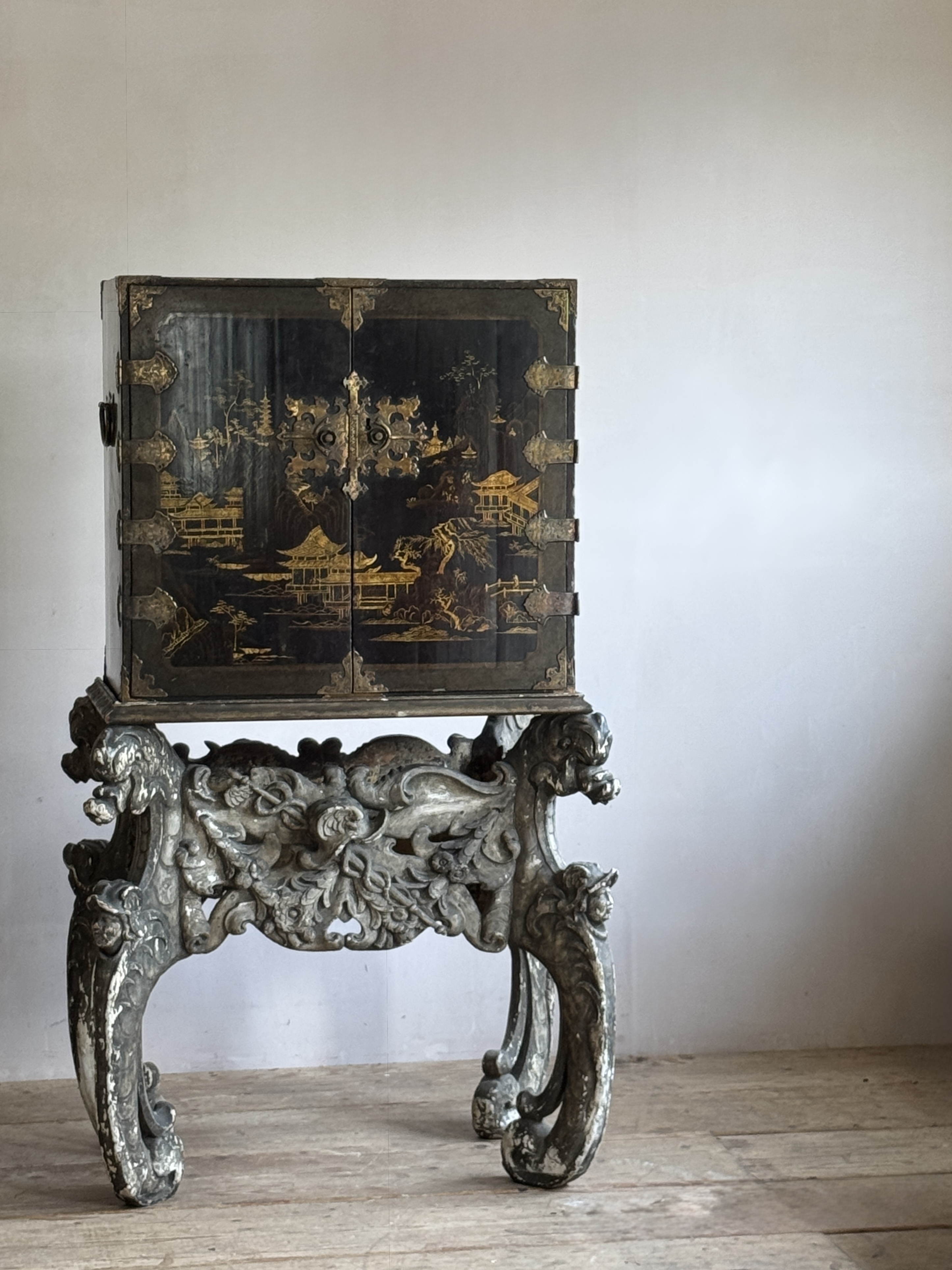
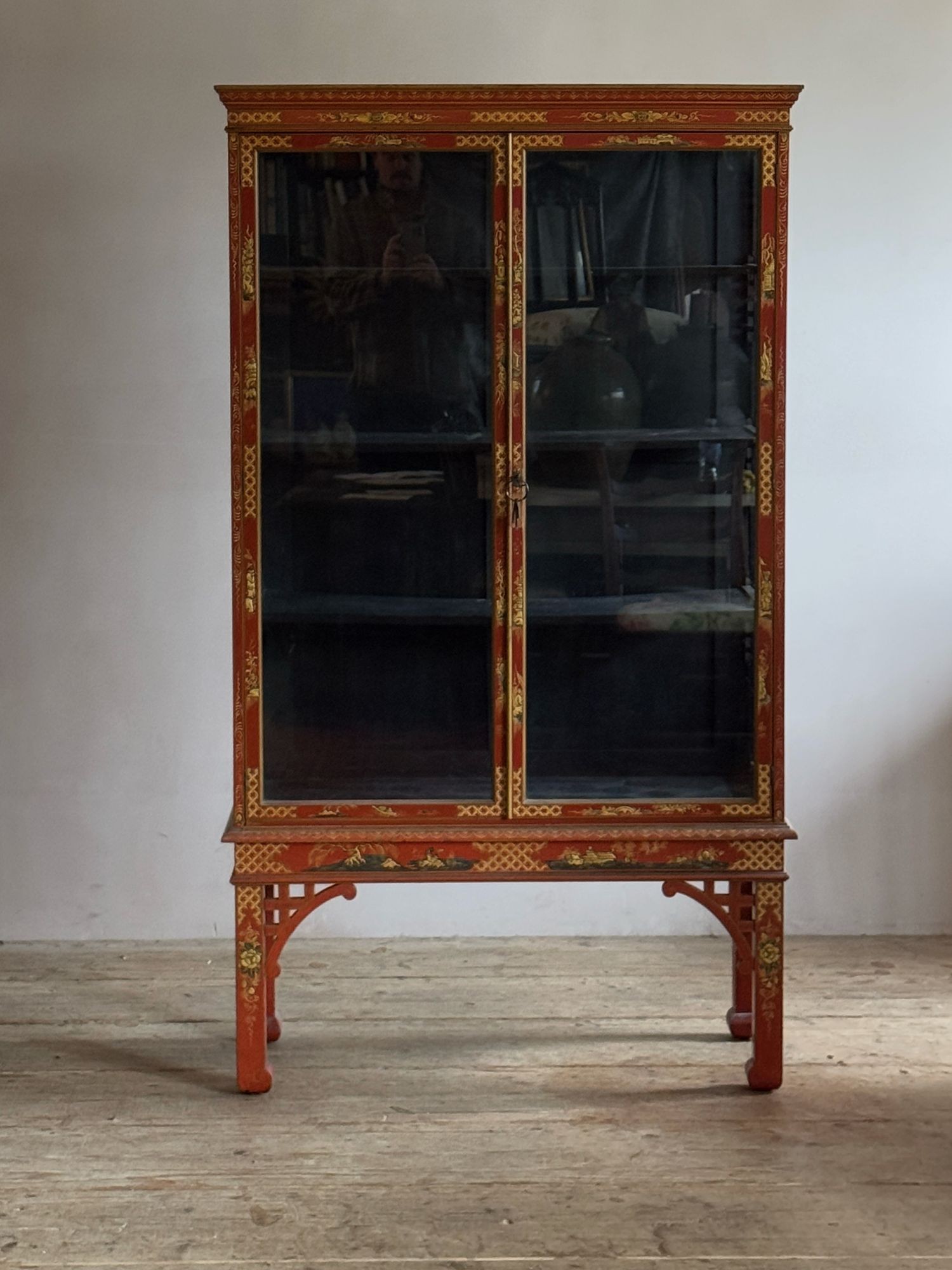
A Japanese Edo Period Lacquer Cabinet on a Carved Baroque Stand, Late 17th Century
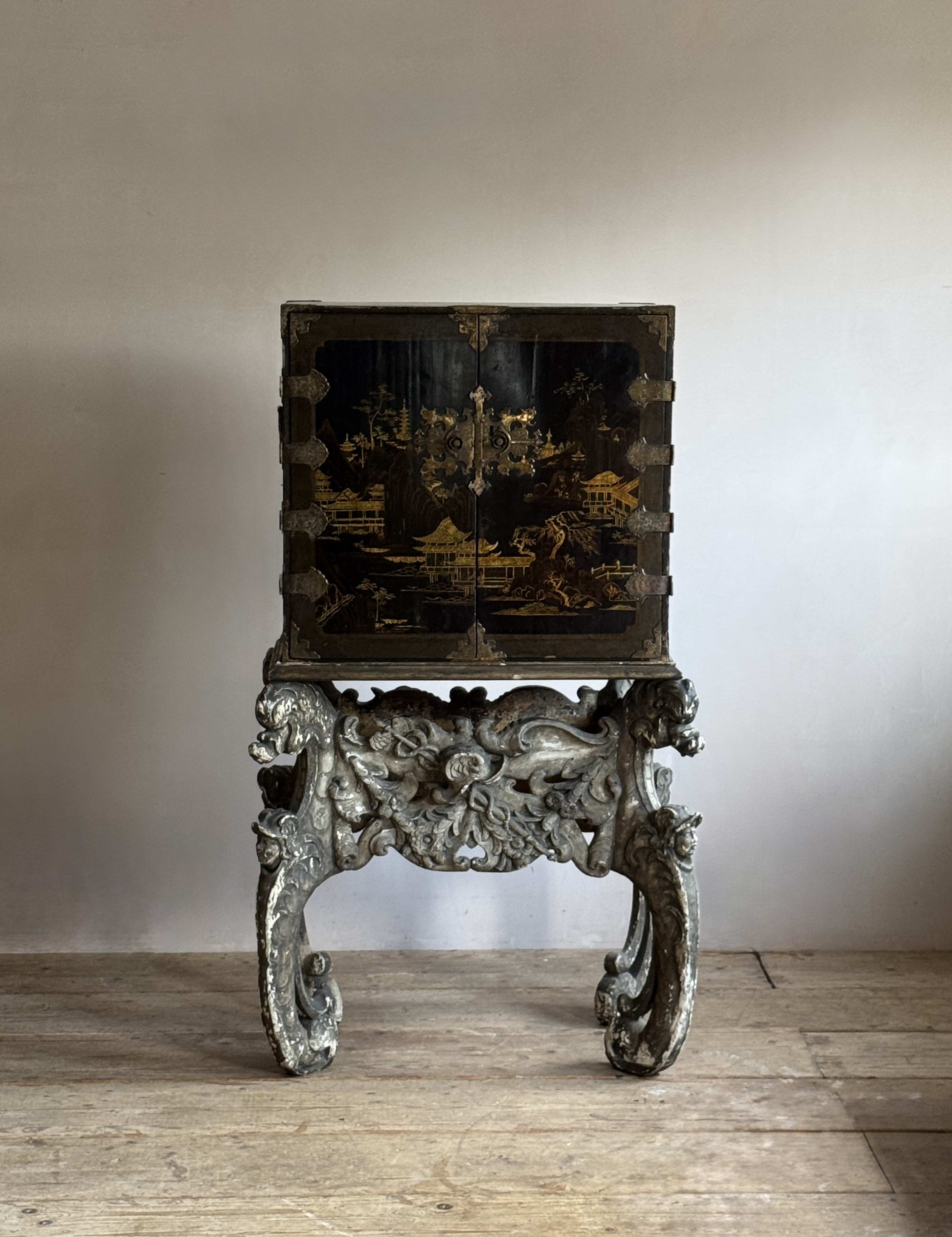
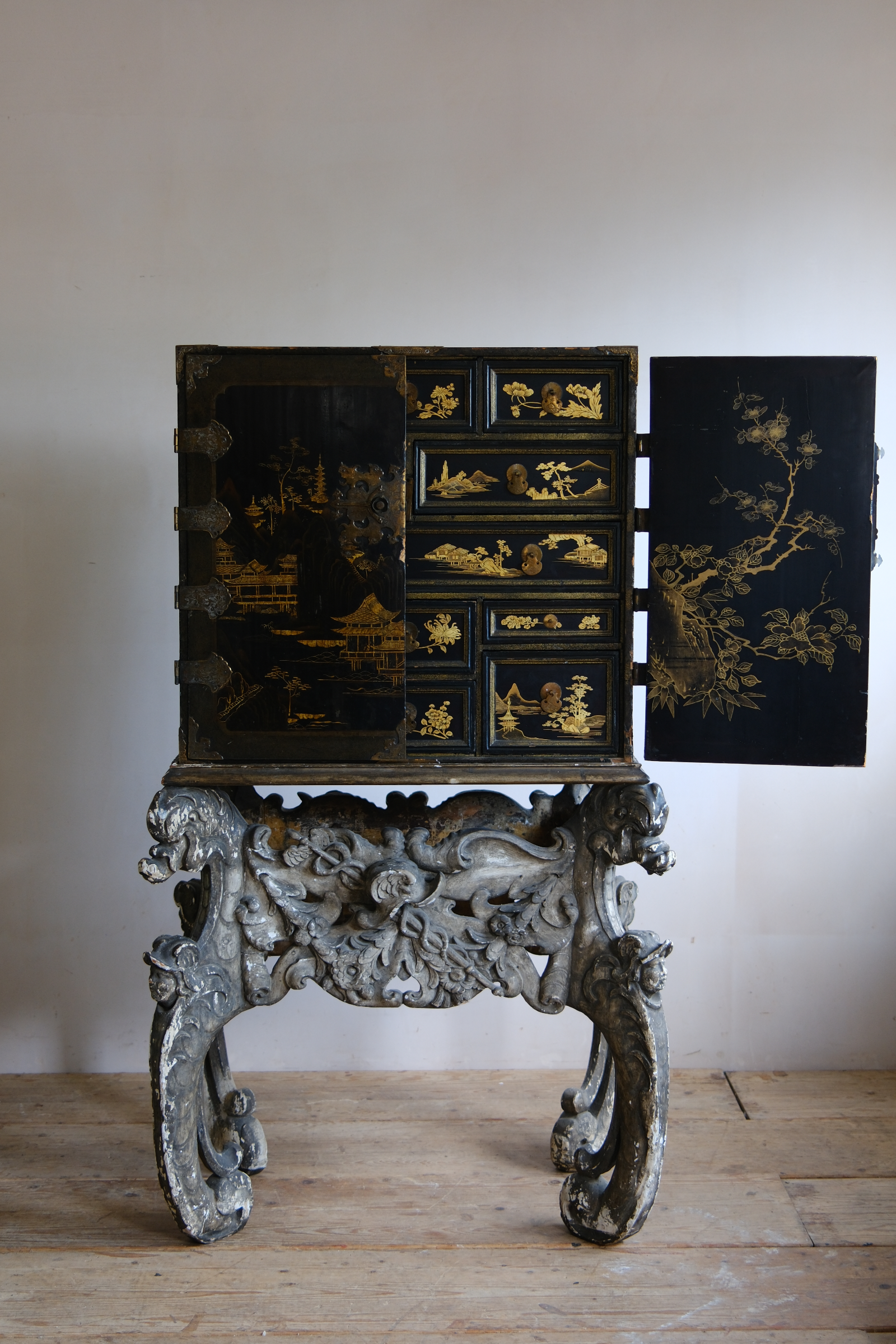
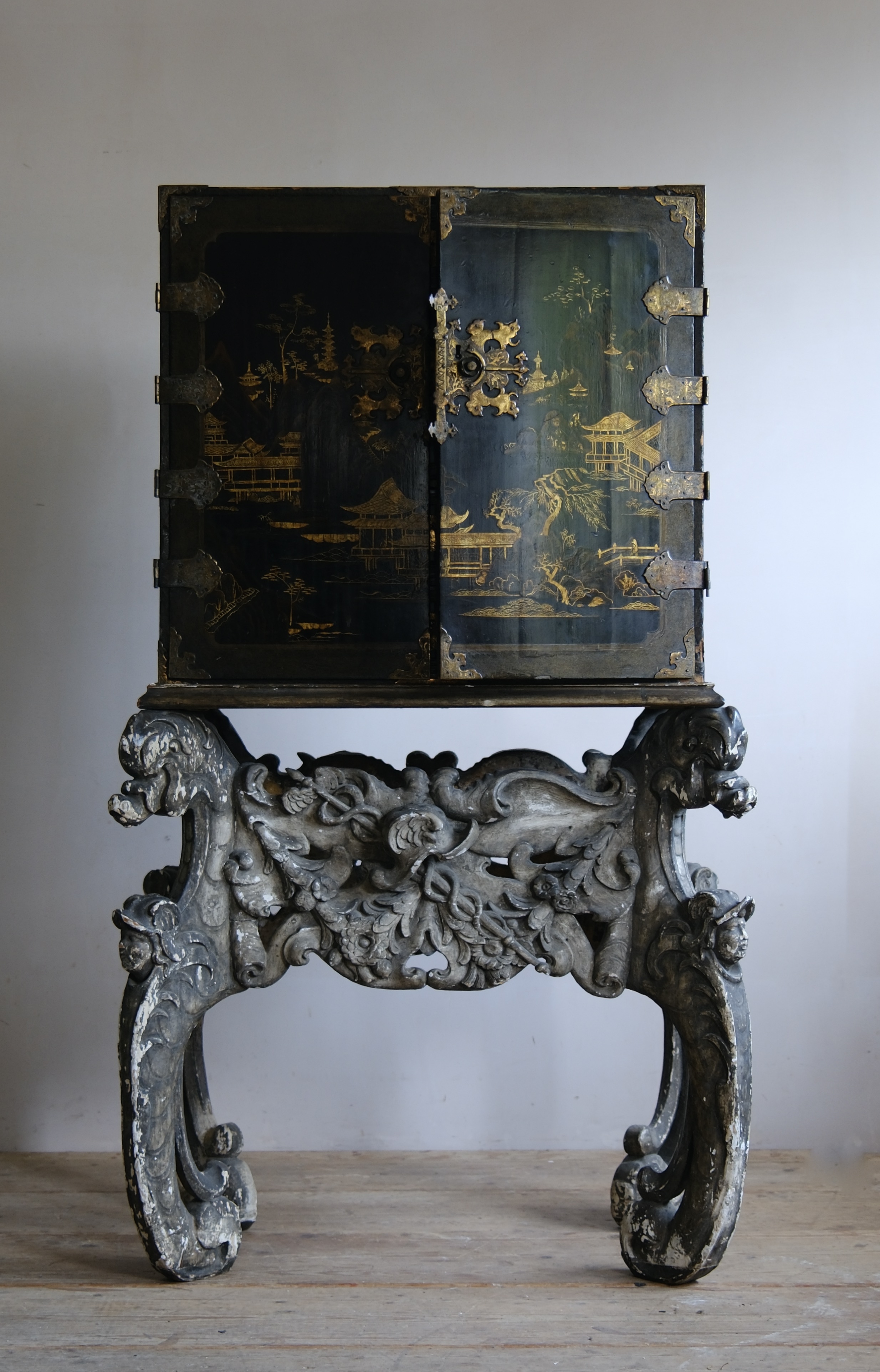
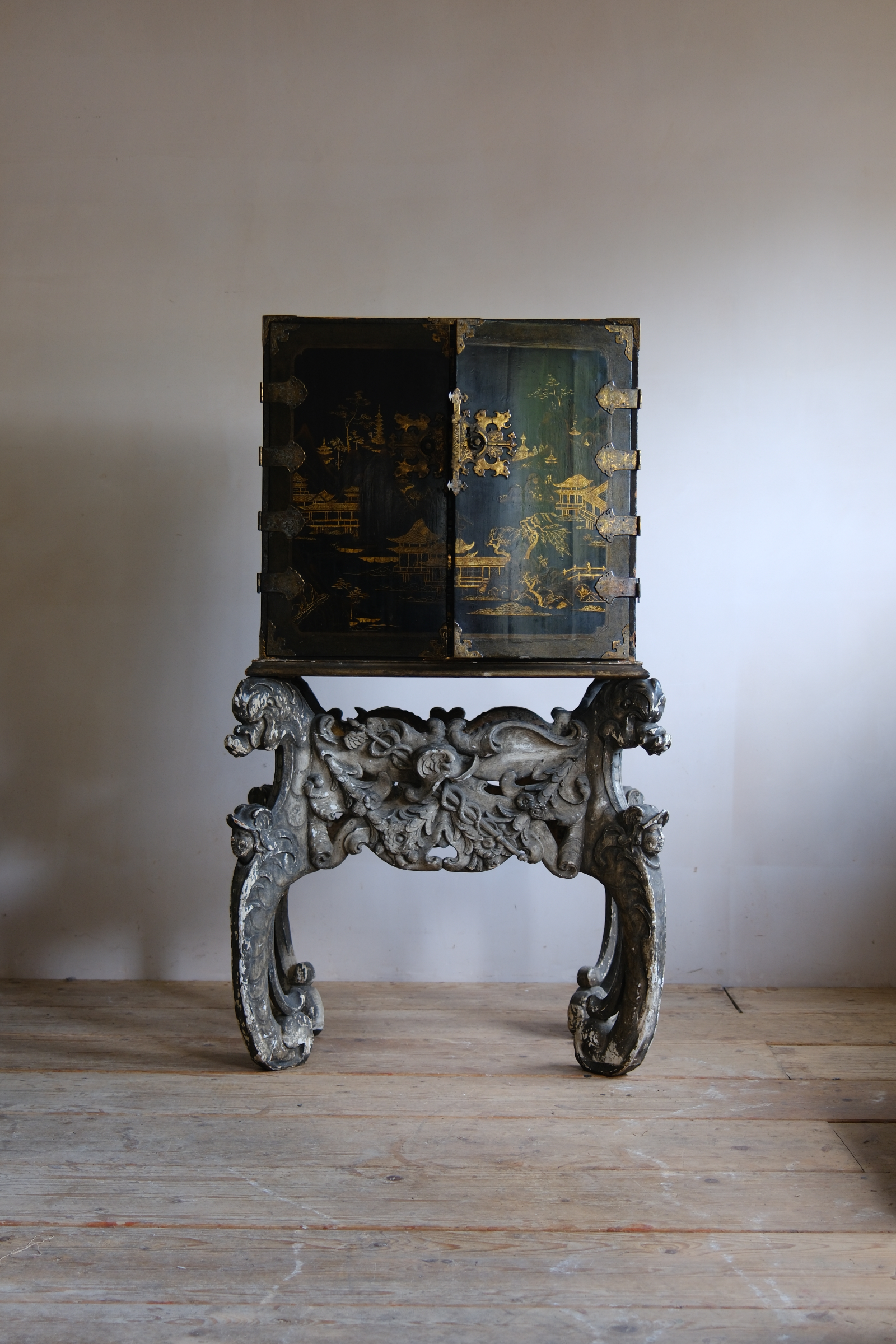
This fine Japanese export lacquer cabinet dates from the late 17th century and is mounted on an exceptionally elaborate English Baroque stand of approximately 1675–90.
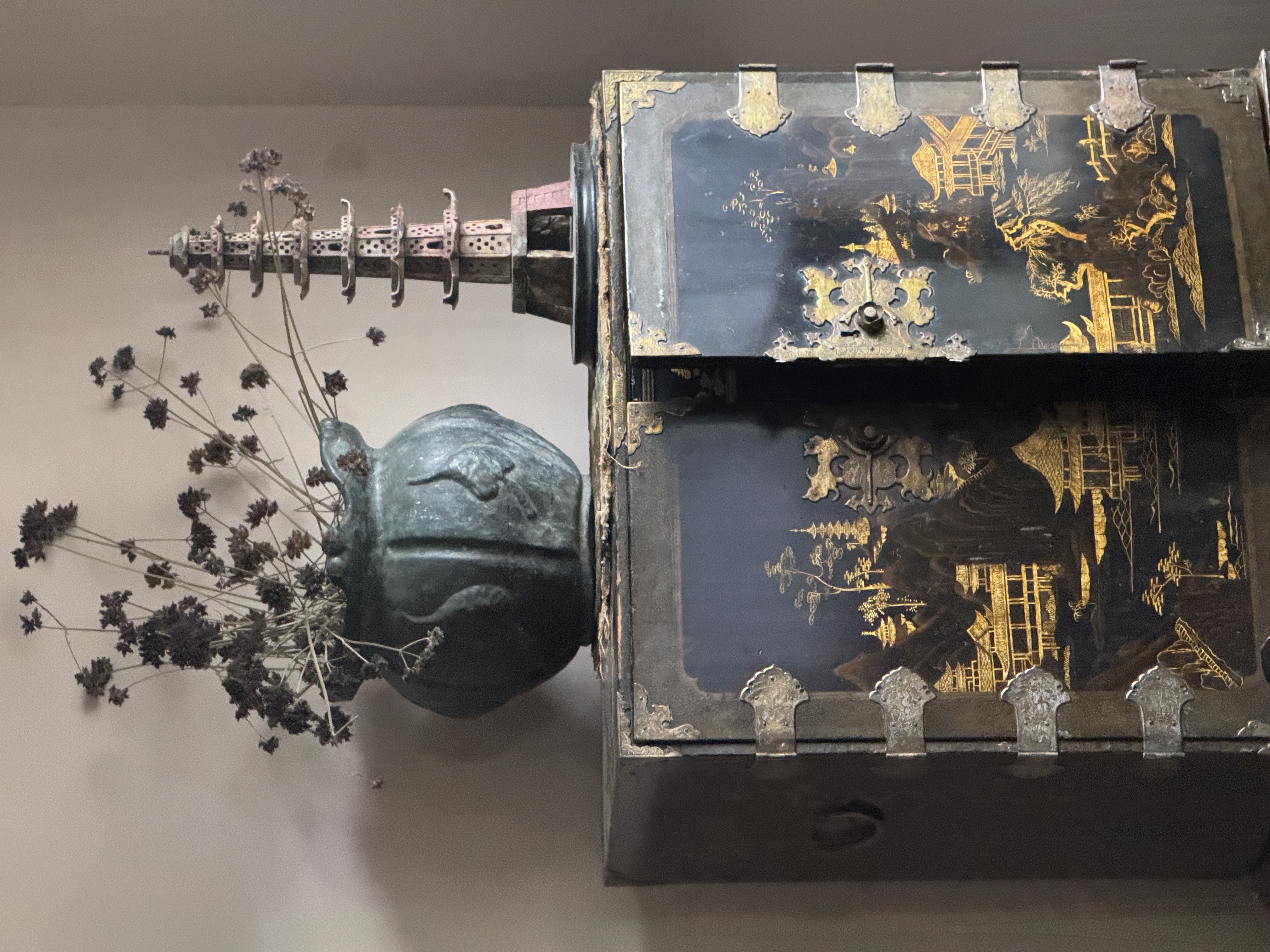
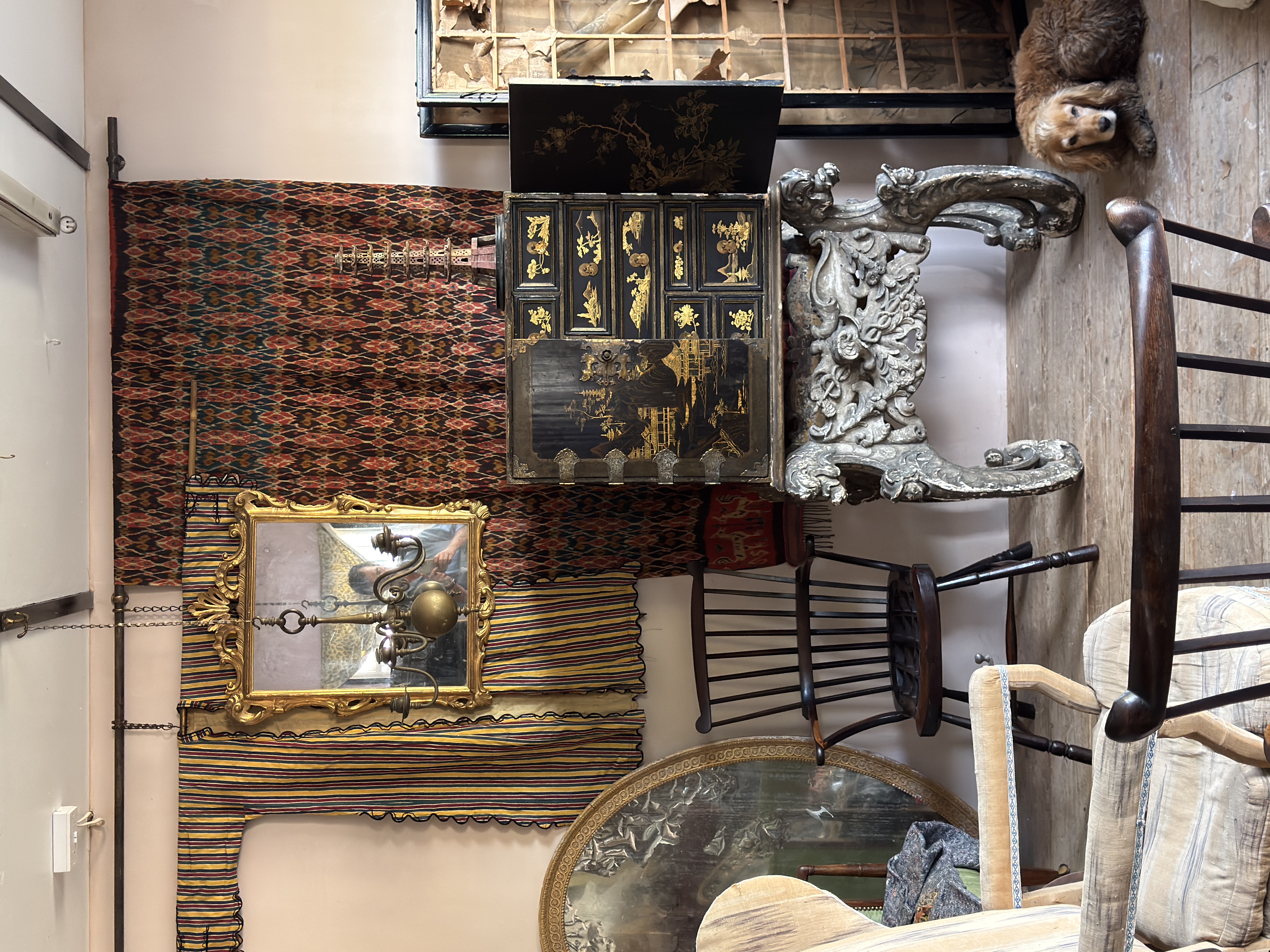
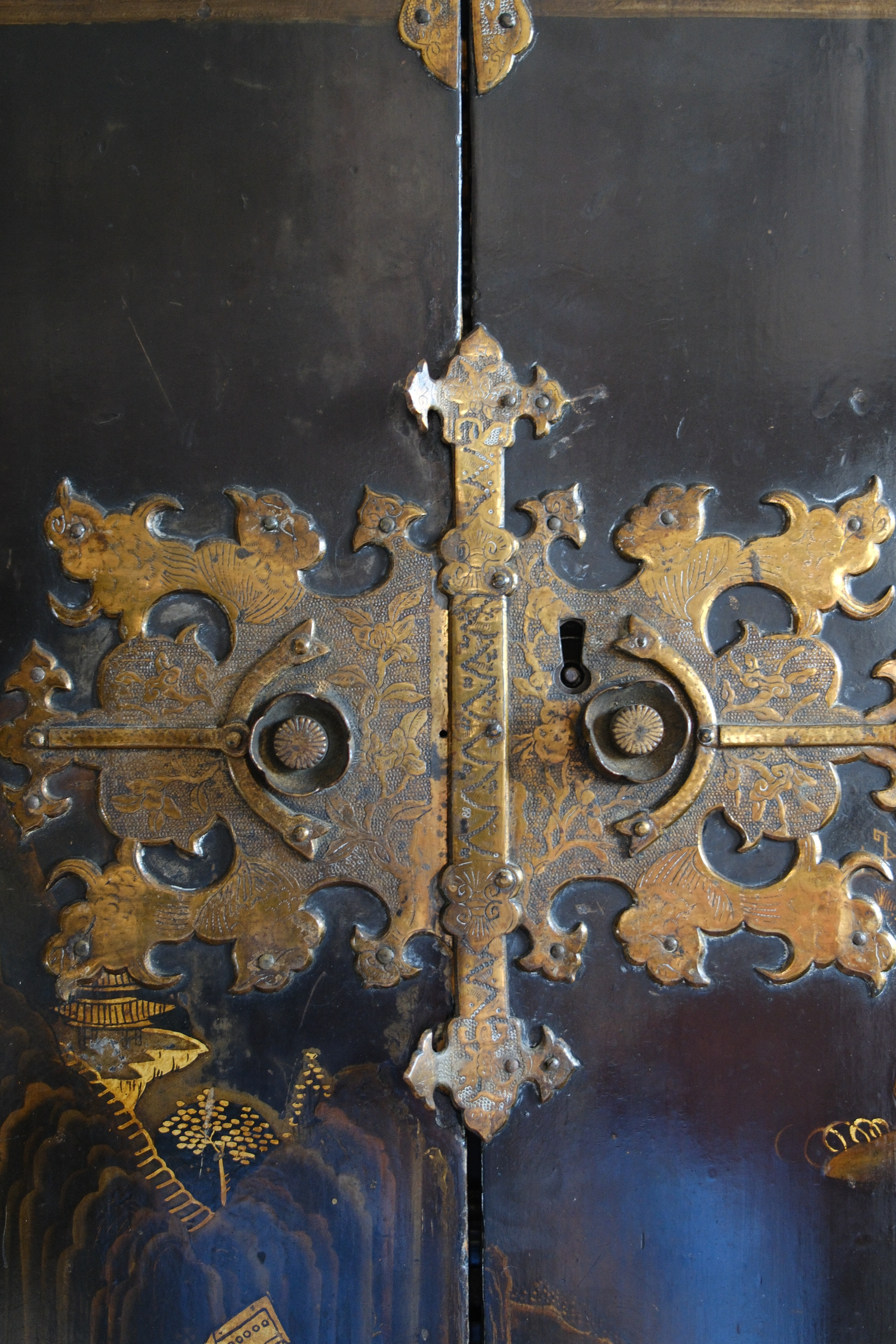
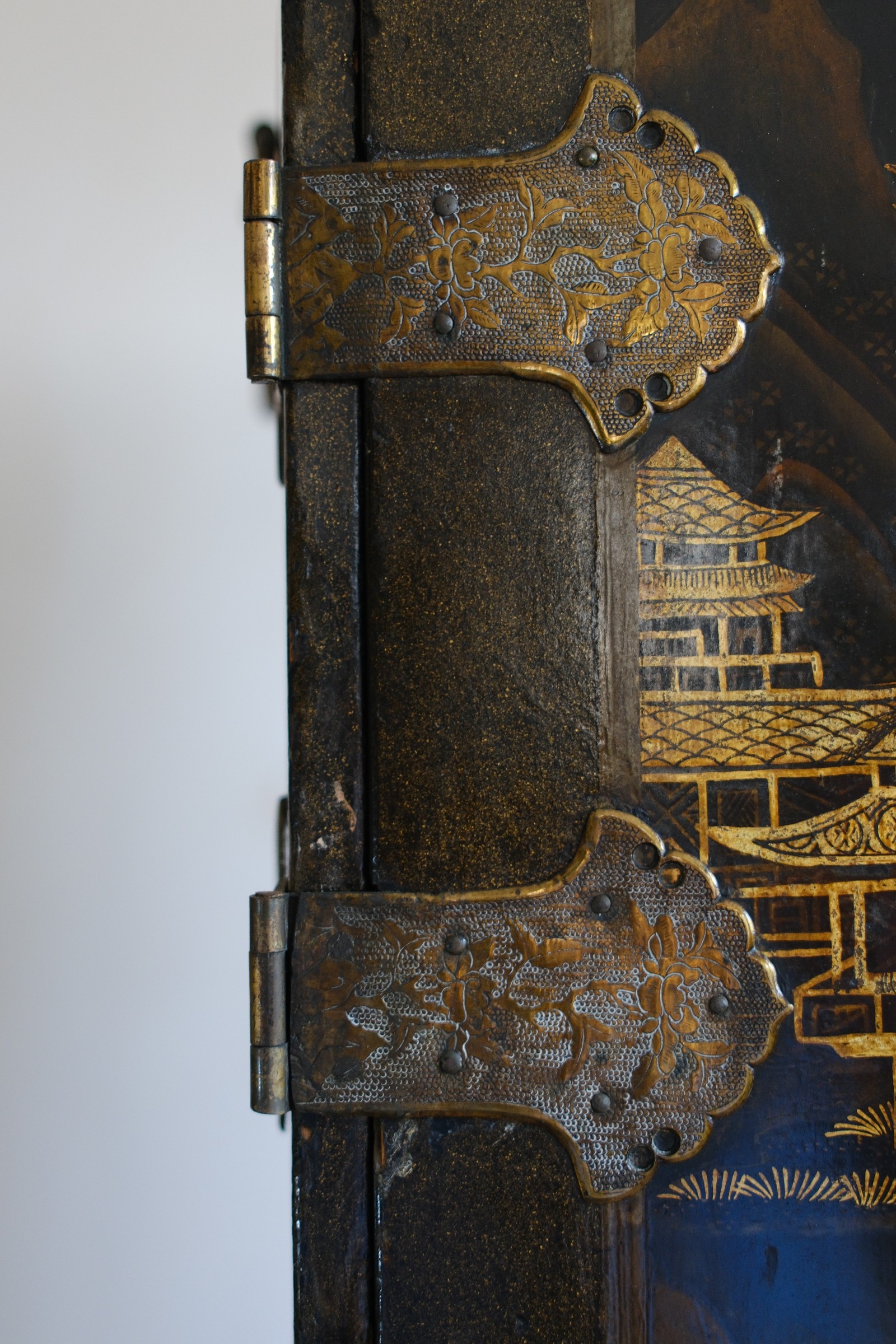
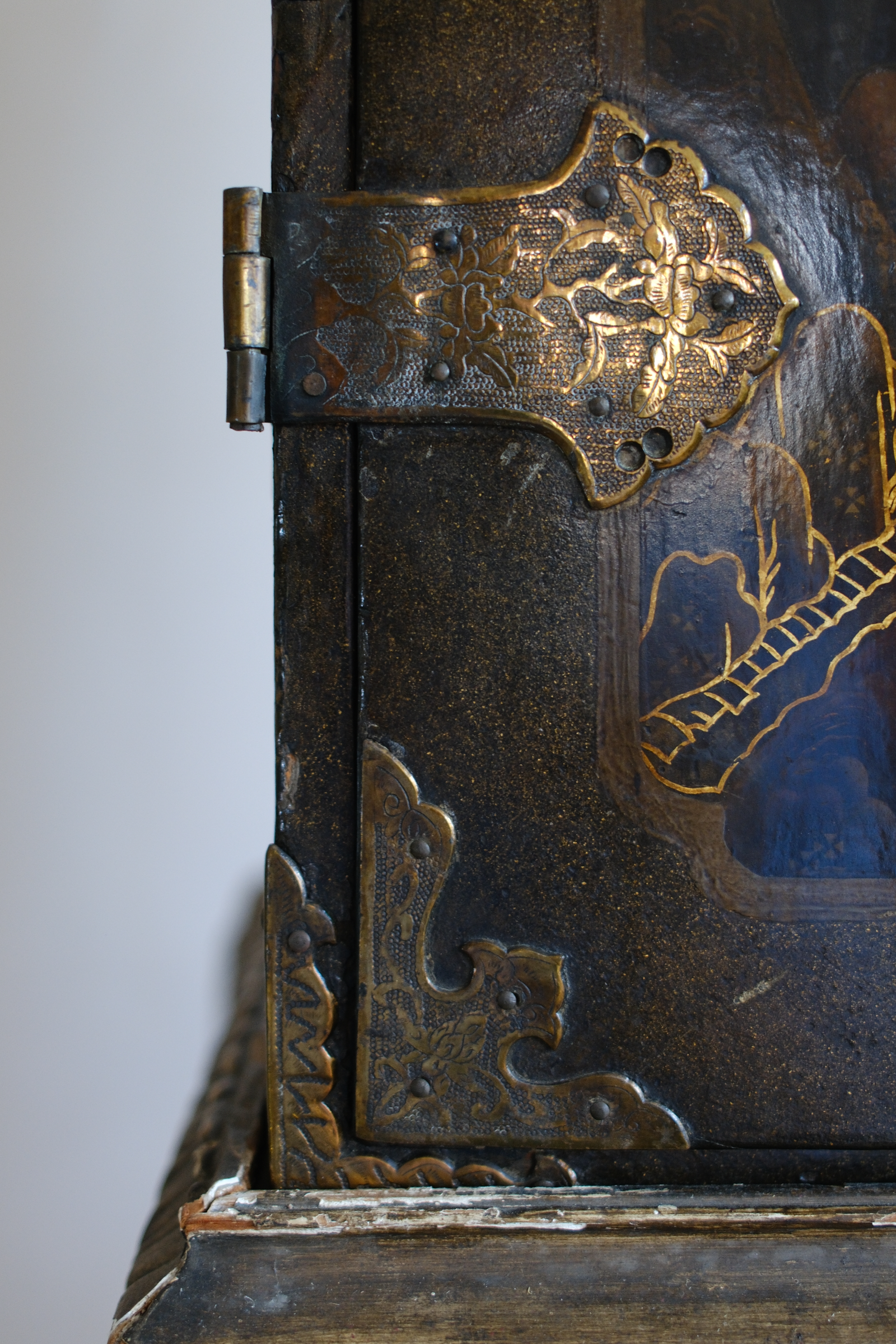
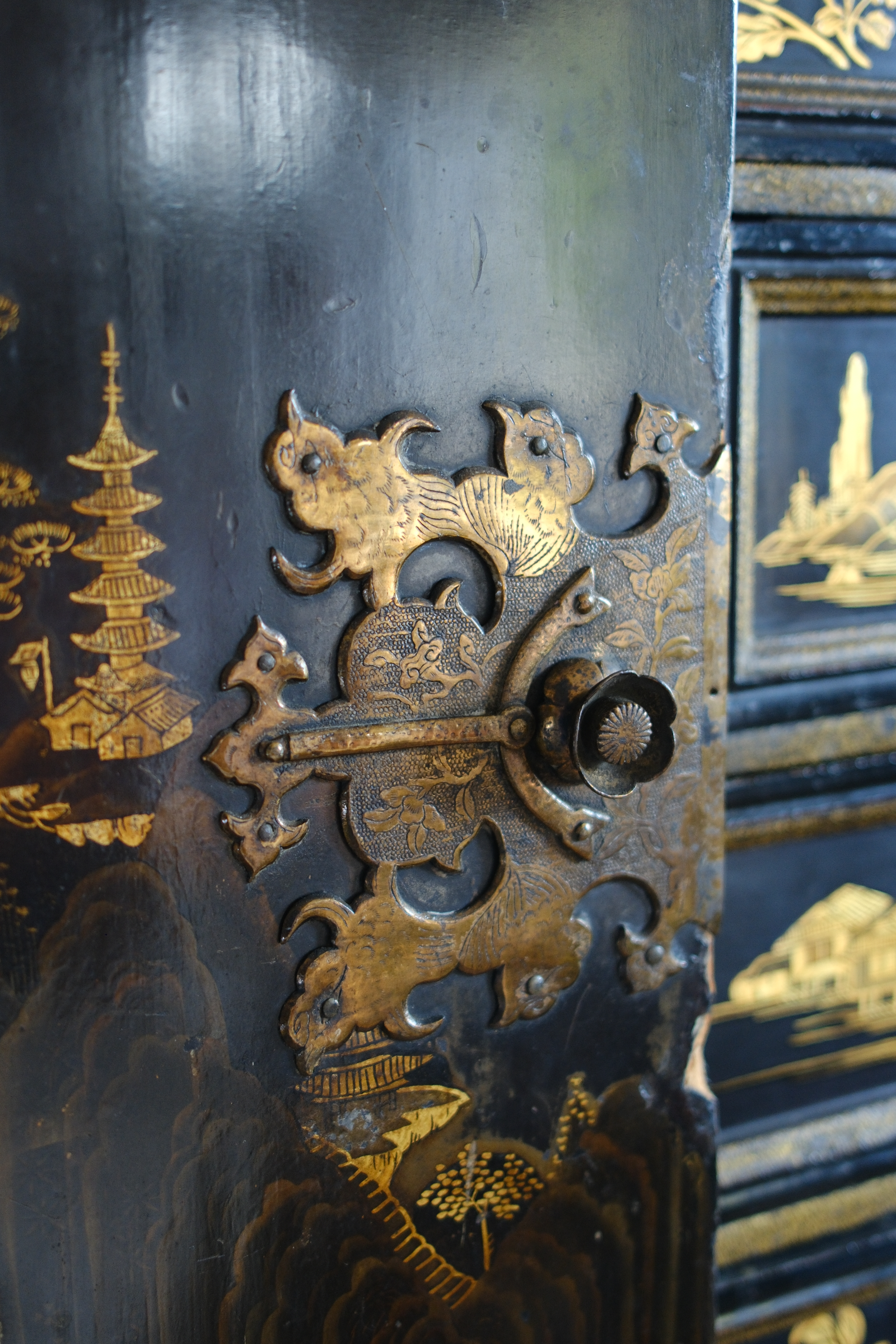
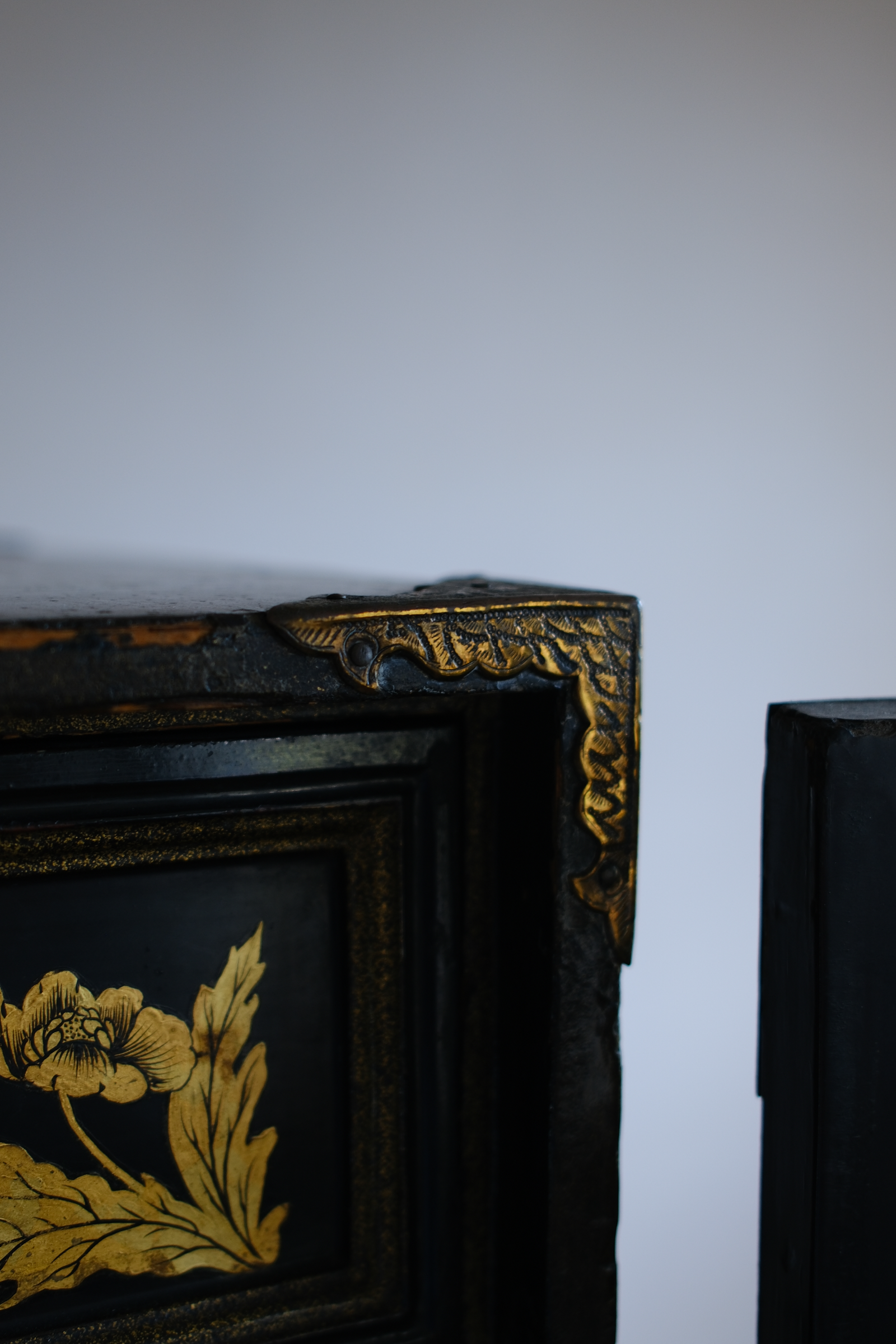
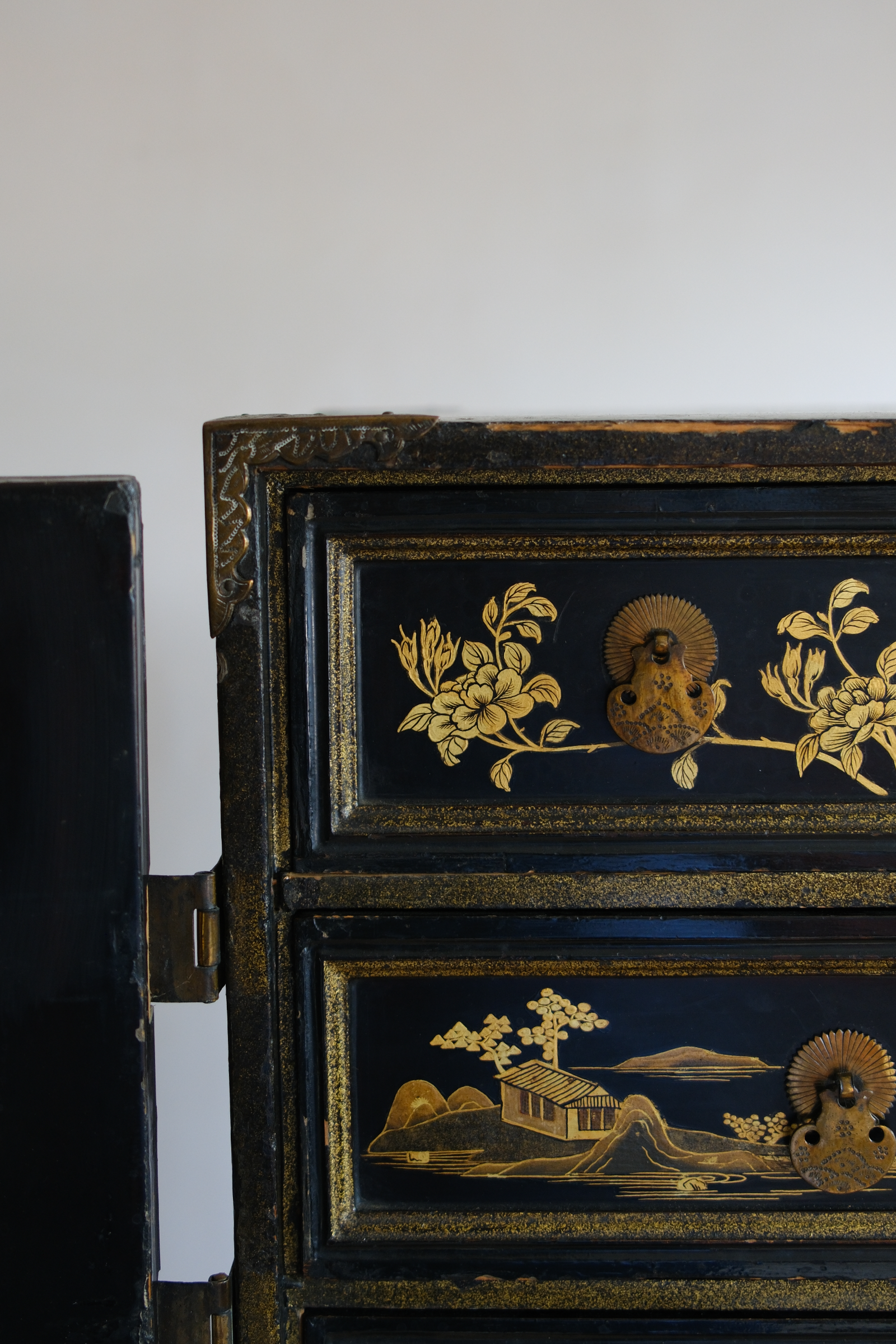
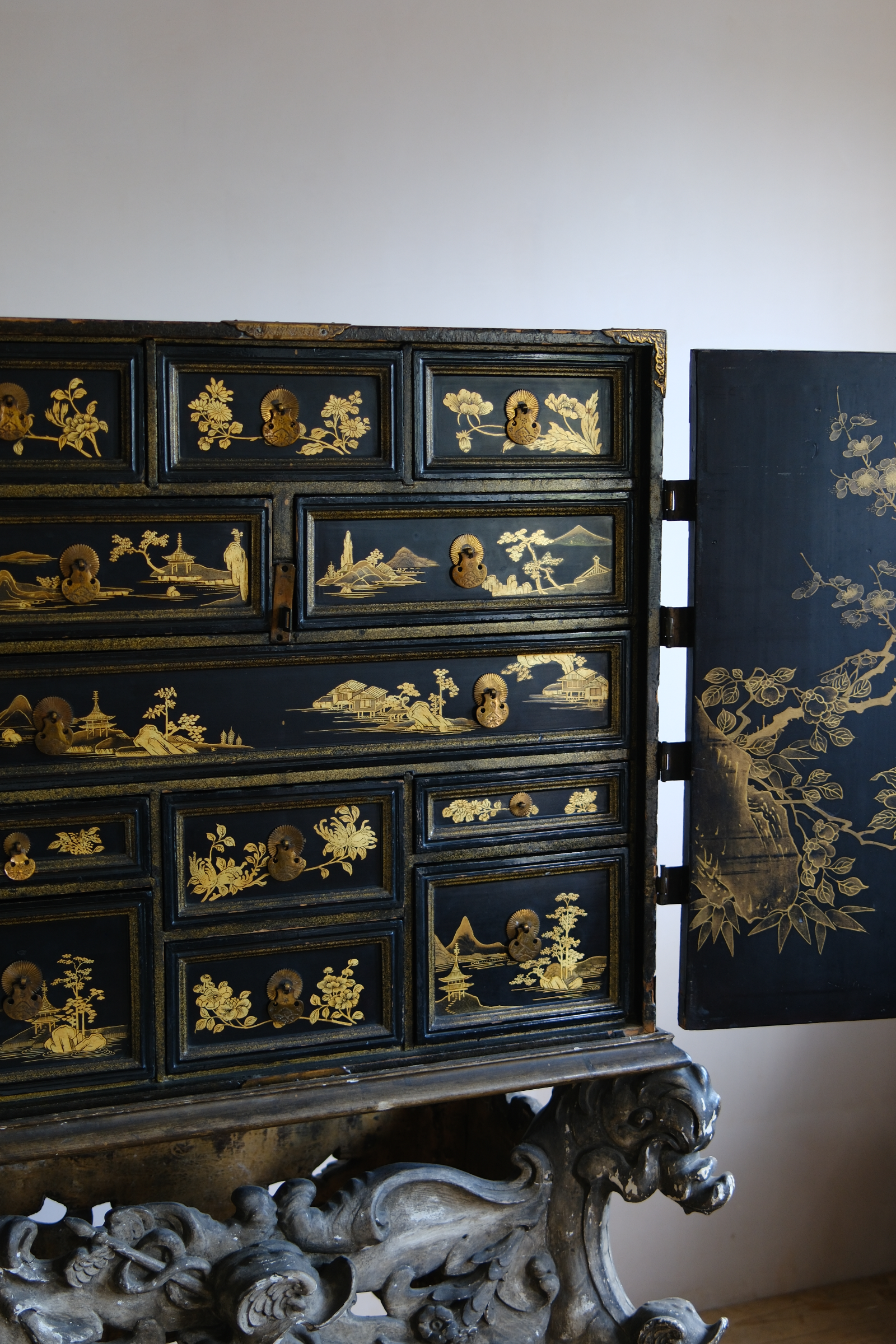
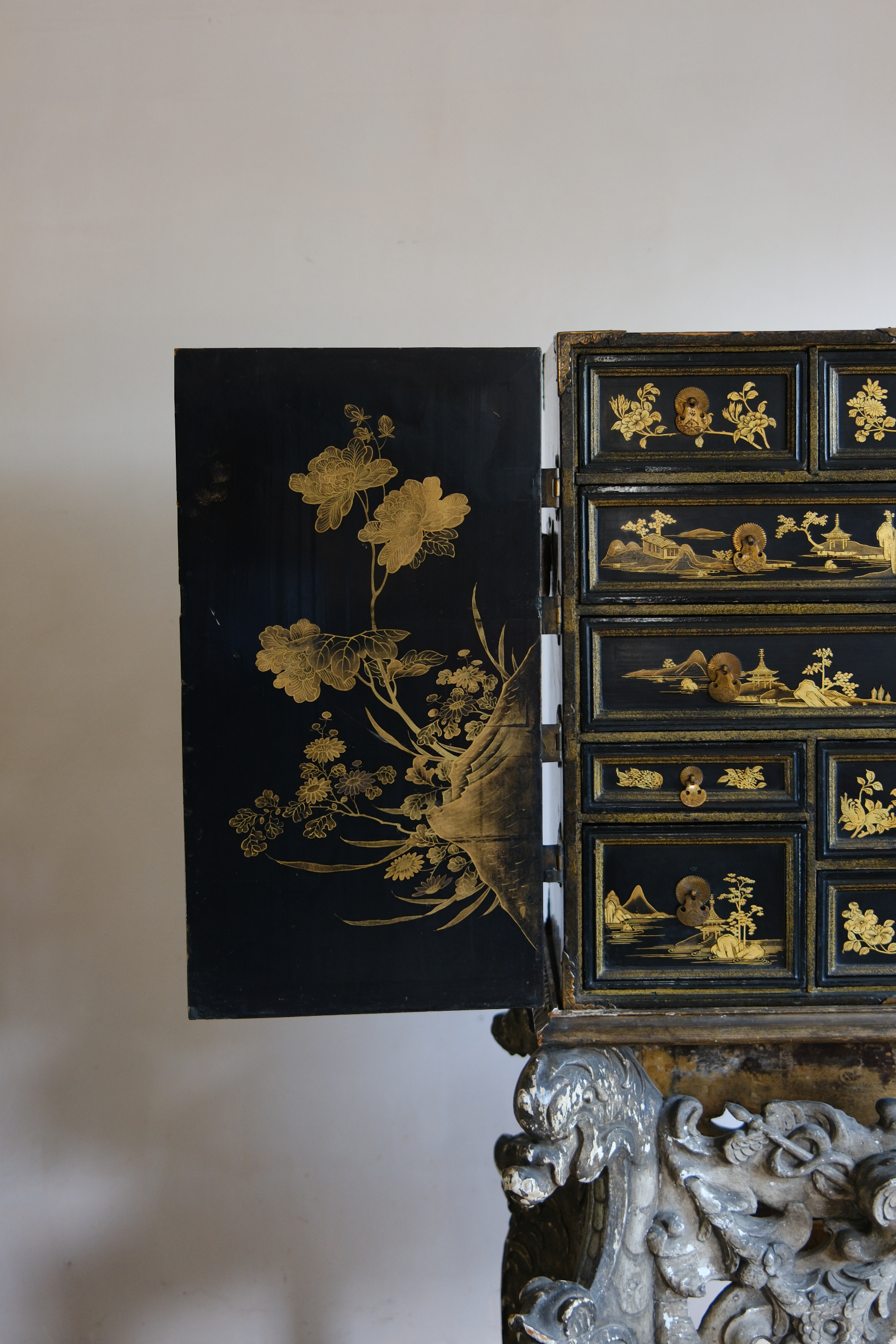
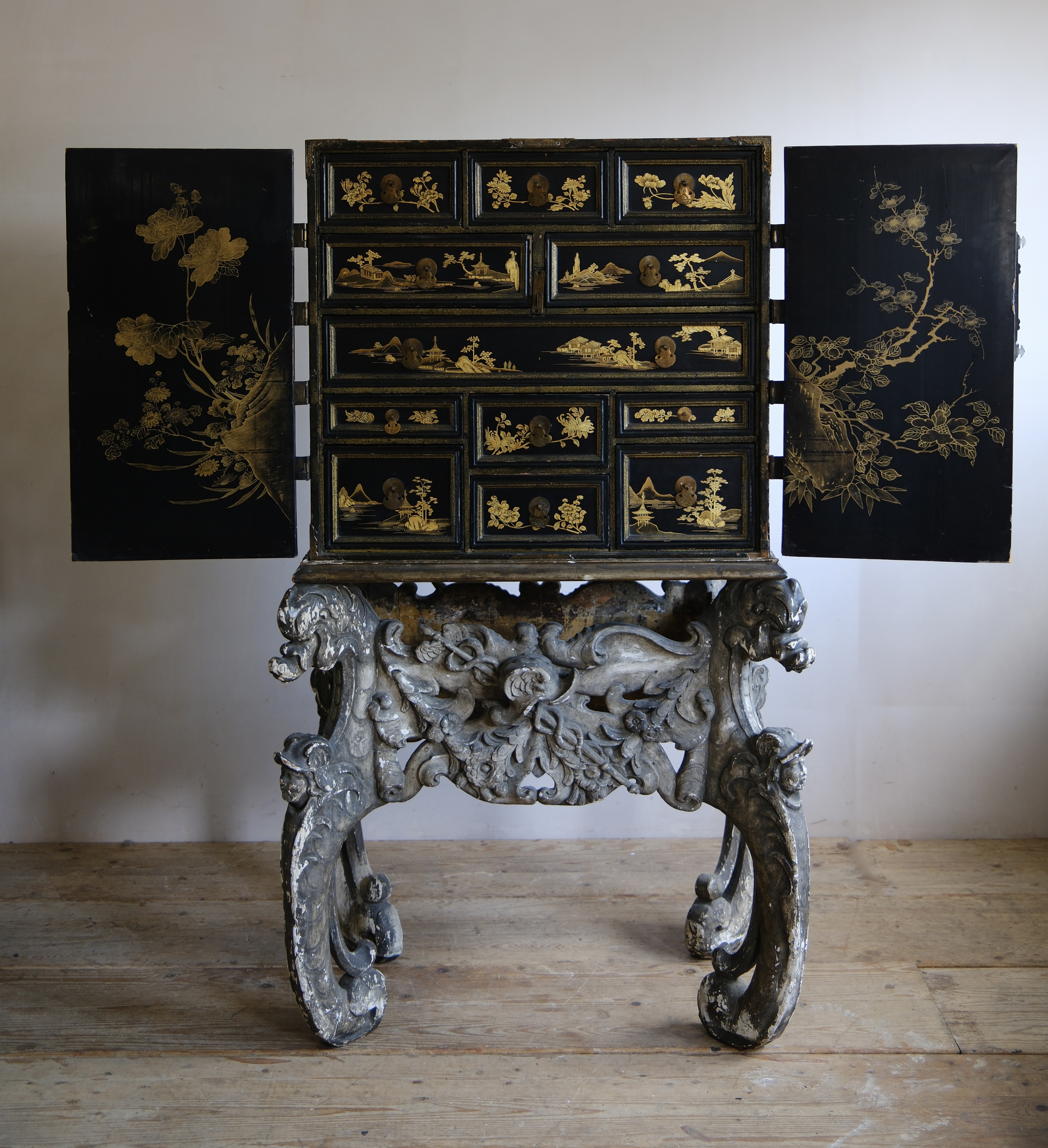
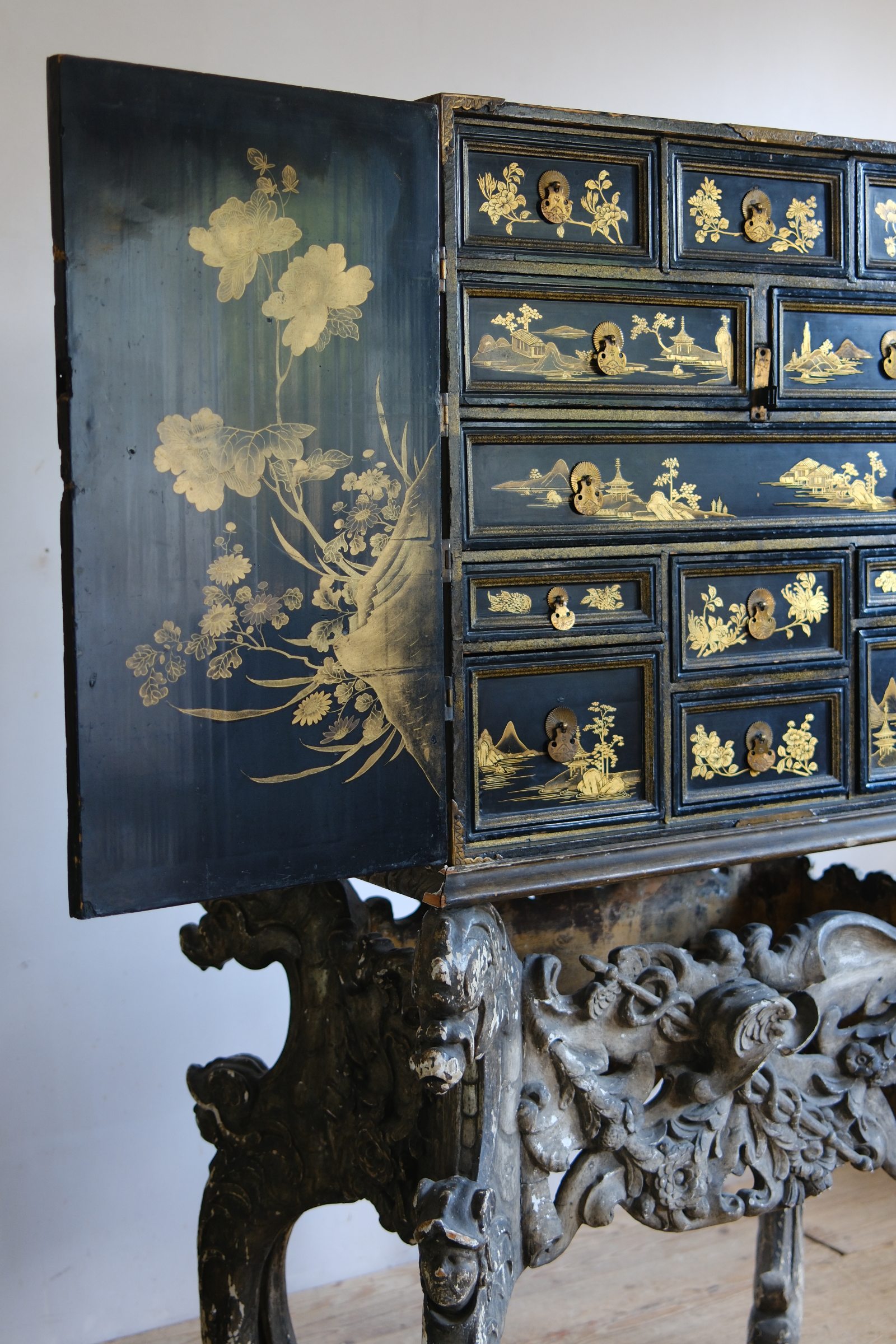
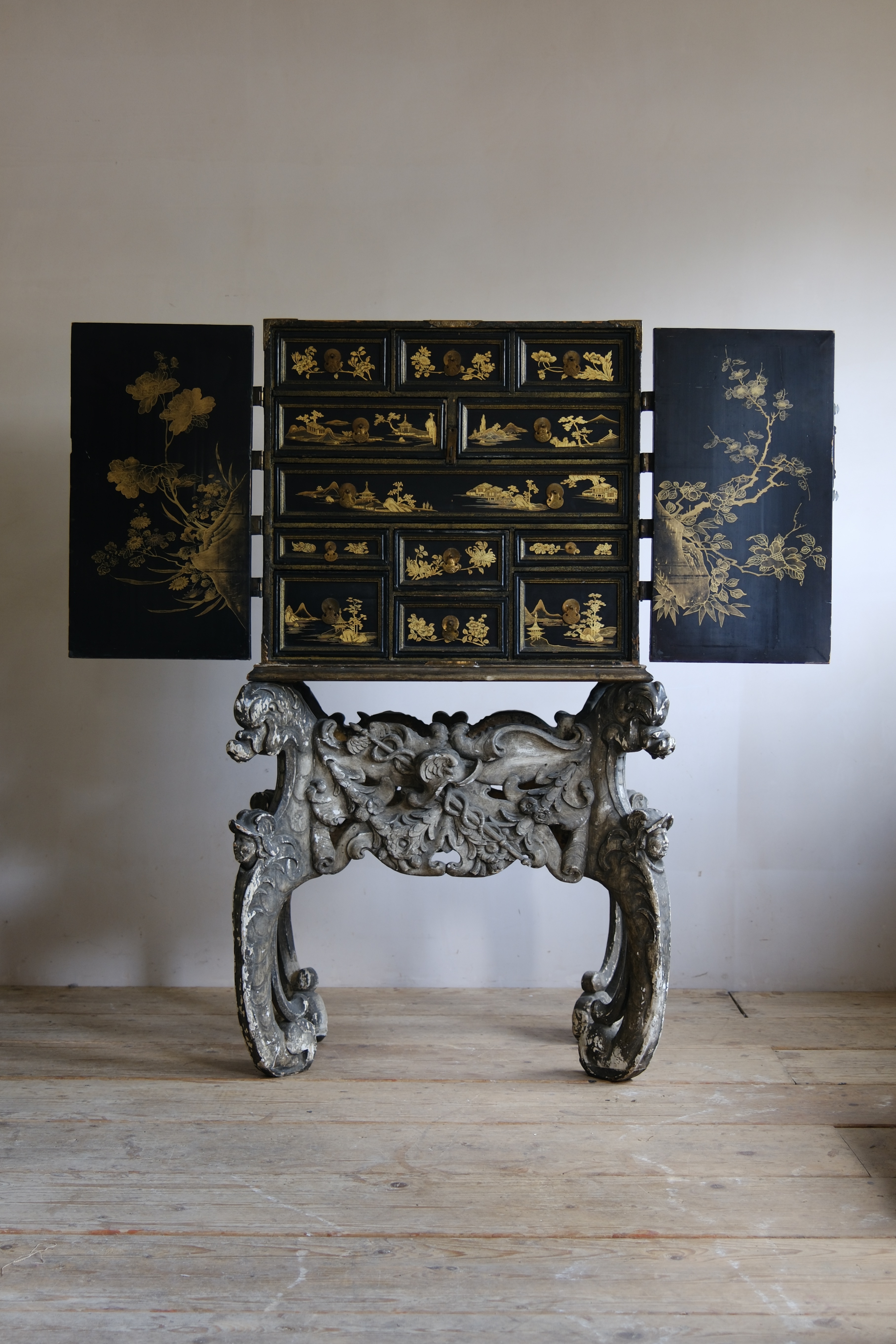
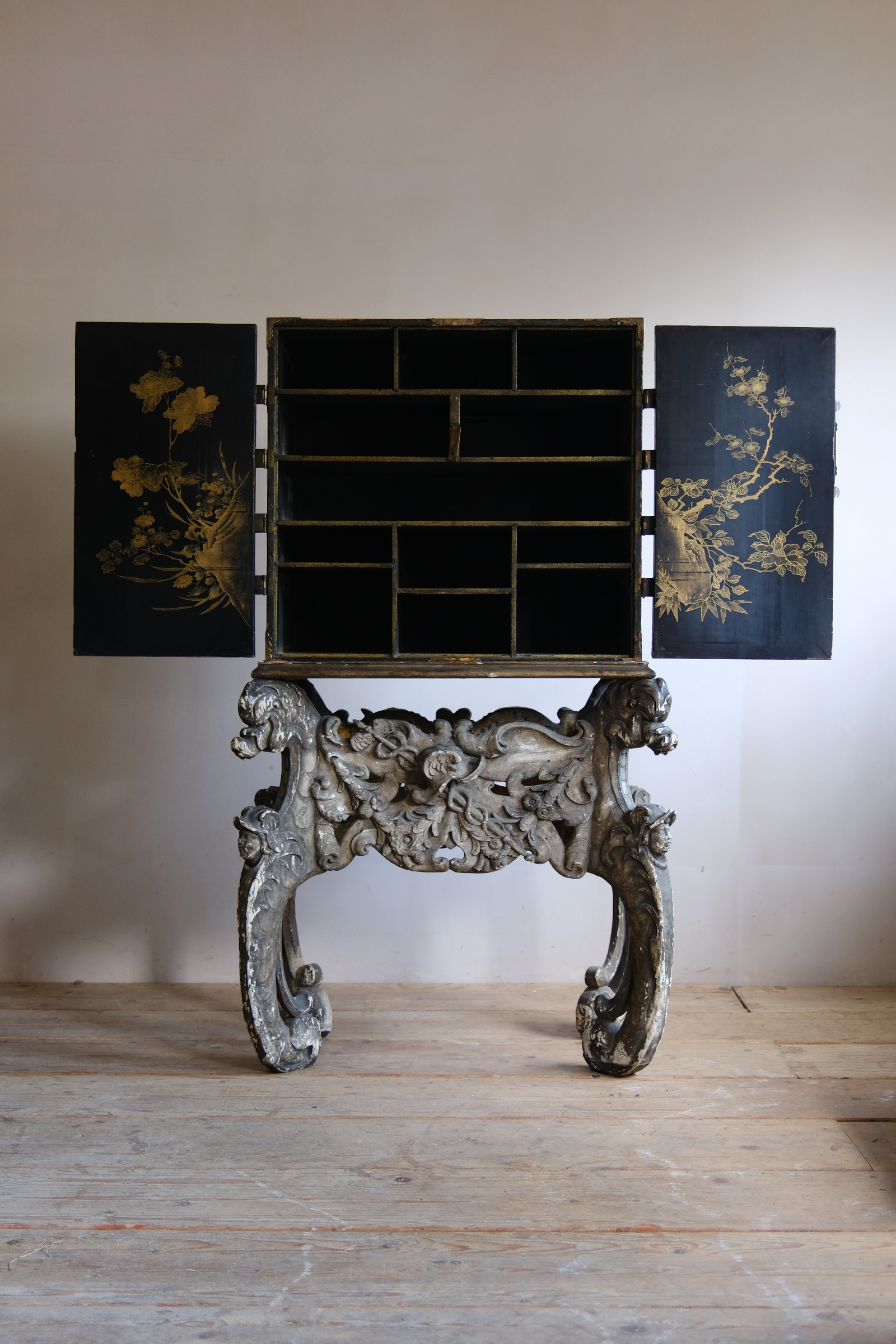
The cabinet is decorated throughout in gold hiramaki-e and takamaki-e on a lustrous black lacquer ground, with mountainous landscapes, pavilions, bridges, and waterside scenes arranged across the doors and sides. The composition is characteristic of the export lacquer produced in Japan during the Edo period for the European market, where the restrained architectural and landscape imagery was prized for its exoticism, technical refinement, and suitability for the grand interiors of the late 17th century. The doors open to reveal a fitted interior of eleven drawers, each retaining its original lacquer decoration and fitted with engraved copper-alloy mounts. Original Japanese characters survive within the carcass, providing important evidence of the cabinet’s early construction and authenticity.
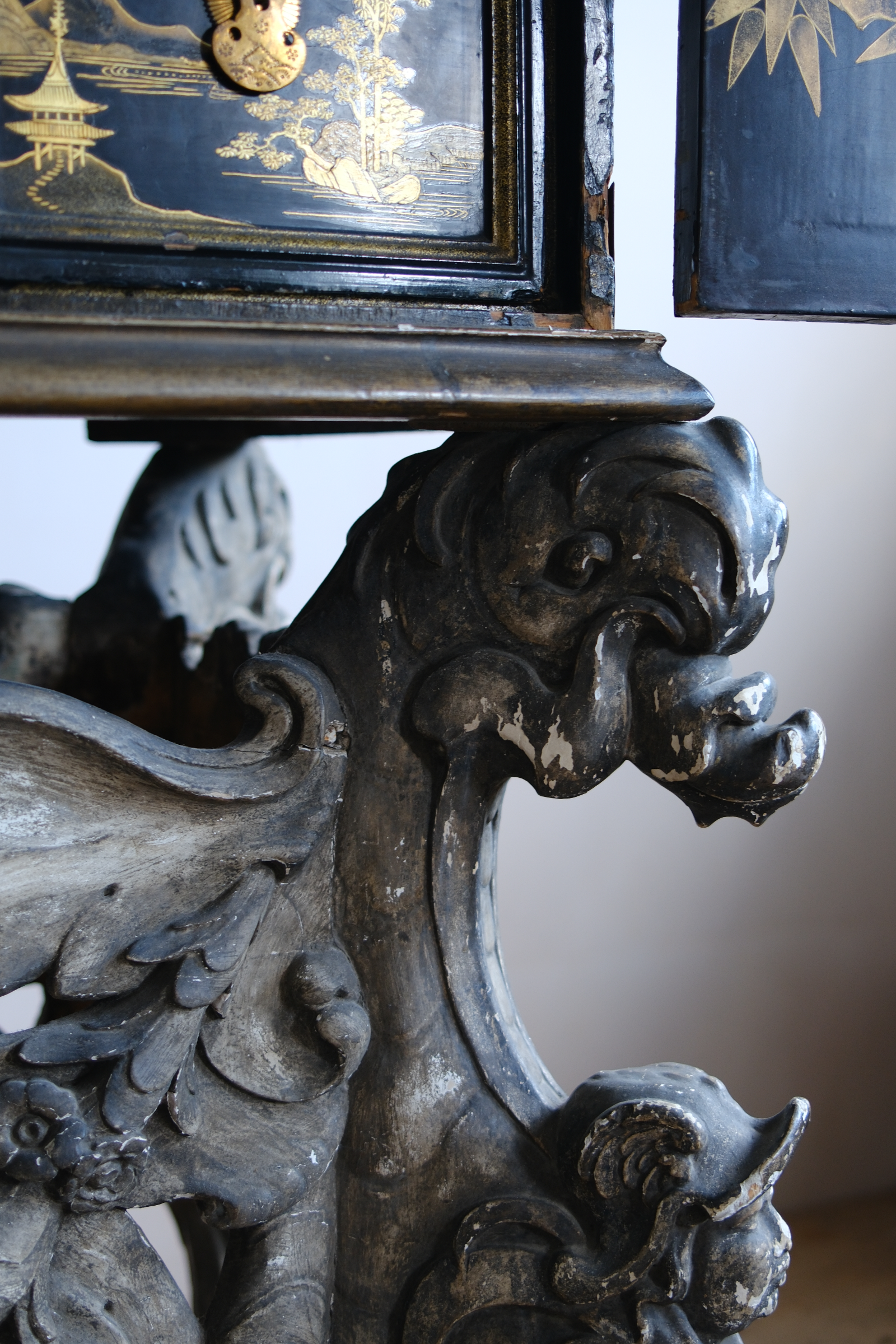
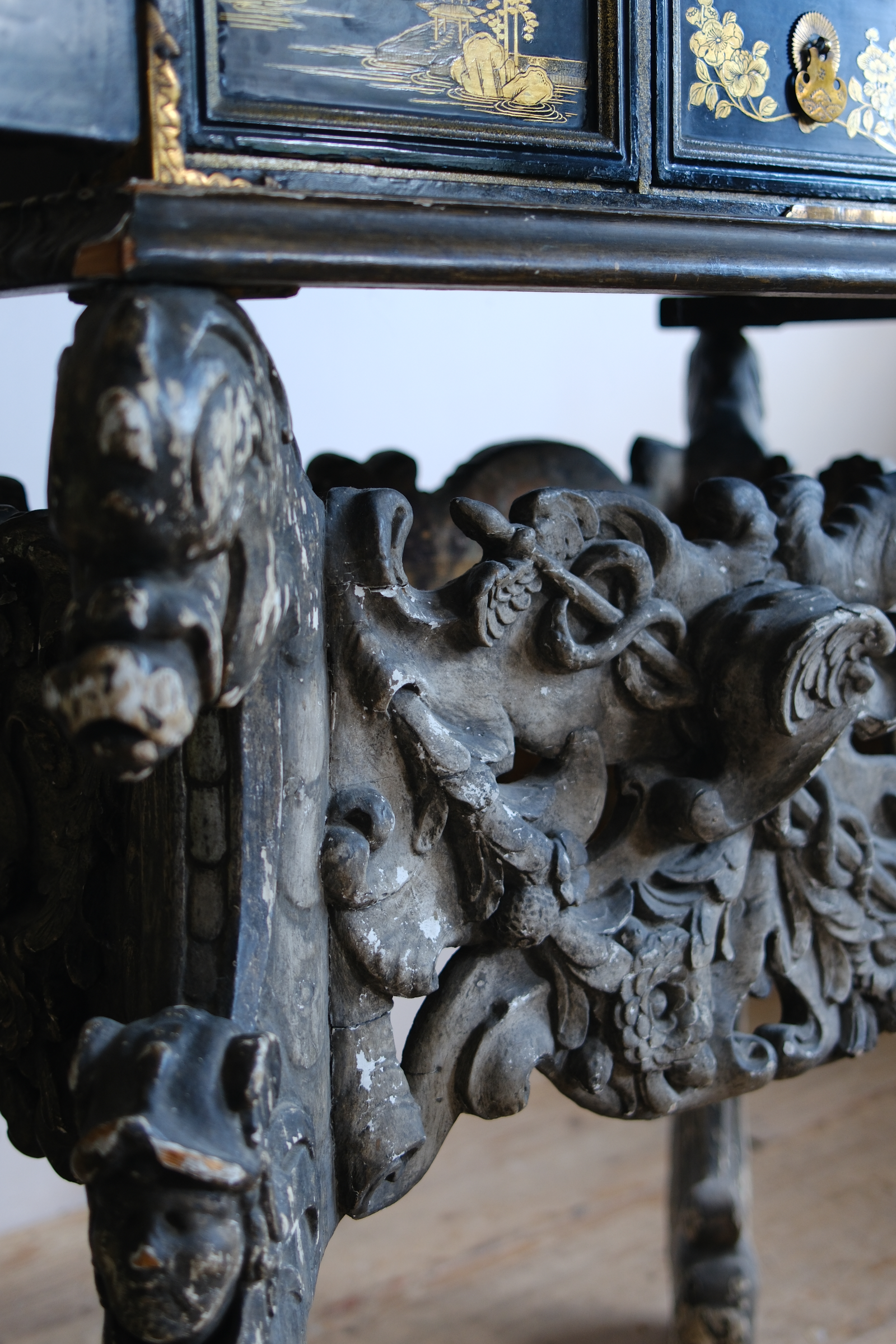
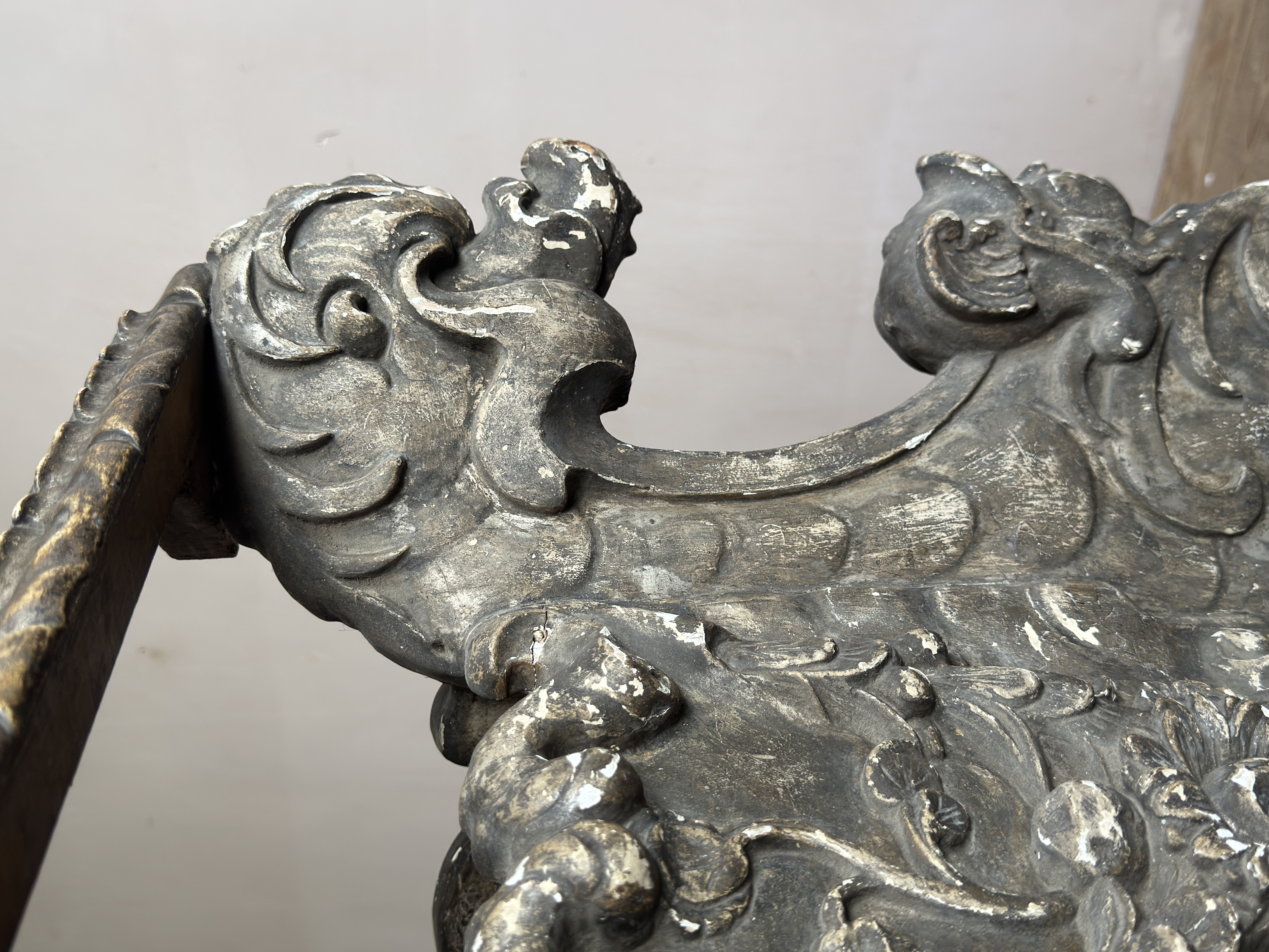
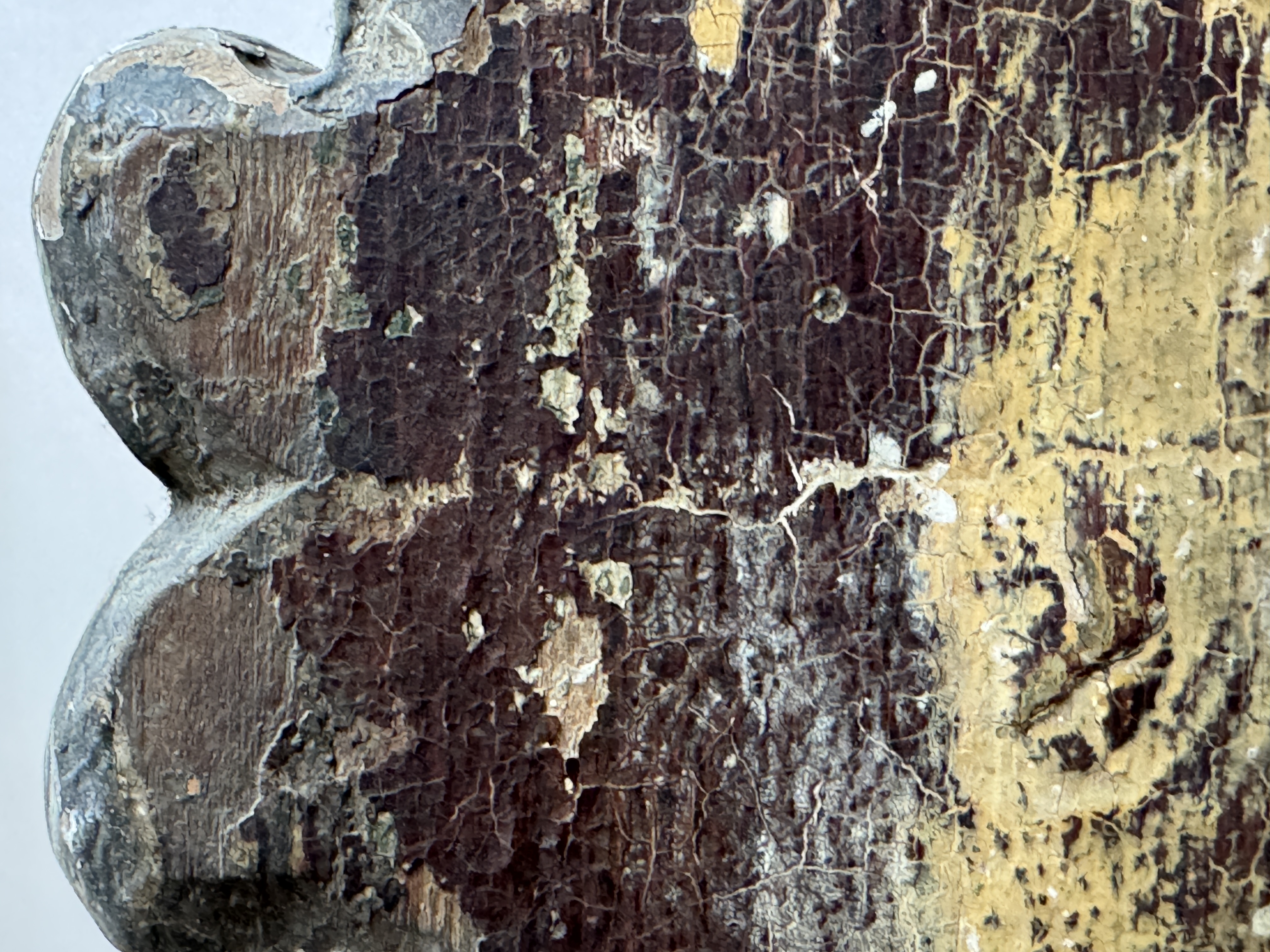
The cabinet is raised on a remarkable carved Baroque stand, possibly English or Dutch and datable to circa 1675–90, with scrolling foliage, caryatid dolphin legs, winged figures, and the attributes of Mercury integrated into a highly animated design. The combination of marine creatures, human and fantastic forms, and luxuriant foliate carving reflects the taste for theatrical and allegorical furniture that developed in Restoration England. Traces of historic silvering survive on the carving, while the underside retains areas of green and red polychrome decoration. Stylistically the stand has elements of the Dutch kwabstijl, or auricular tradition, which influenced furniture carving in the Netherlands and England during the seventeenth century.
The pairing of a Japanese lacquer cabinet with a European carved stand was central to the presentation of Asian lacquer in aristocratic and royal interiors. Such cabinets were imported into Europe principally through the Dutch East India Company, whose trade networks brought Japanese lacquer to Amsterdam and thence to the courts and collections of England, France, Germany, and Italy. Once in Europe, cabinets were frequently altered, fitted, or mounted to suit local taste. Their transformation into highly elaborate pieces of furniture reflects the European fascination with lacquer as both a luxury material and a symbol of global commerce. The present cabinet and stand are particularly compelling in this respect, preserving the dialogue between Japanese craftsmanship and European Baroque design.
The stand’s carving relates stylistically to the sophisticated furniture produced for the court and aristocratic households of Restoration London. Its animated dolphins, winged figures, and scrolling foliage recall the work of leading late 17th-century English carvers, including the circle of Grinling Gibbons and the craftsmen associated with royal and aristocratic commissions.
Particularly relevant comparisons are the c.1673 ‘Dolphin’ chairs and c.1677–79 sleeping chairs at Ham House associated with the French-born royal upholsterer Jean Poictevin, while the work of the Pelletier family and Gerrit Jensen demonstrates the continuation of this tradition and its application to stands for Japanese lacquer cabinets.
The use of Mercury’s attributes is especially appropriate to a luxury object associated with trade, travel, and the movement of precious goods between Europe and Asia. The stand’s combination of silvered details and potential historic polychrome decoration further reflects the period taste for richly contrasted surfaces, in which gilding, silvering, and painted ornament were used together to heighten the theatrical effect of carved furniture.
Comparable examples of the European mounting of Japanese lacquer can be found in a number of important historic interiors and collections. The elaborate carved furniture at Ham House, Surrey, provides a particularly relevant comparison for the character of the carving and the survival of richly finished late 17th-century English stands. Ham House preserves a group of furniture associated with the taste of the Restoration period, including highly sculptural supports and stands that demonstrate the close relationship between imported lacquer and English Baroque interiors. Further comparisons may be drawn with Japanese lacquer cabinets mounted in England for the royal and aristocratic collections of the late 17th and early 18th centuries, including examples formerly or presently associated with the Royal Collection, Chatsworth, and other major country-house collections.
The cabinet itself belongs to the group of Japanese export lacquer furniture that was especially sought after in Europe during the reigns of Charles II and William III. Comparable cabinets are recorded in the inventories of English royal and aristocratic houses, where they were often described as “Japan cabinets” or “Japan work.” Their value lay not only in the quality of the lacquer but also in their ability to serve as focal points within interiors devoted to display, collecting, and the presentation of worldly knowledge. The survival of the original drawer arrangement, engraved mounts, and Japanese characters within the carcass significantly enhances the importance of the present example.
The unusual stand is of equal significance. Its ambitious iconography and complex carving suggest that it was conceived specifically to elevate and display a cabinet of exceptional value. Rather than being a later, generic support, it appears to belong to the period in which the cabinet entered a European collection, and its scale, ornament, and surviving surface treatment indicate that it was intended as a prominent piece of interior architecture. The dolphins and winged figures create a dynamic transition between the cabinet and the floor, while the attributes of Mercury reinforce the object’s associations with commerce, travel, and the exchange of luxury goods.
The present lot is therefore an unusually complete and evocative example of the European reception of Japanese lacquer. It combines a finely preserved Edo-period cabinet, retaining important original structural and decorative features, with a rare and highly sculptural English Baroque stand. Together they embody the cosmopolitan taste of the late 17th century, when Japanese lacquer was transformed within European interiors into a symbol of wealth, sophistication, and participation in the expanding global world.