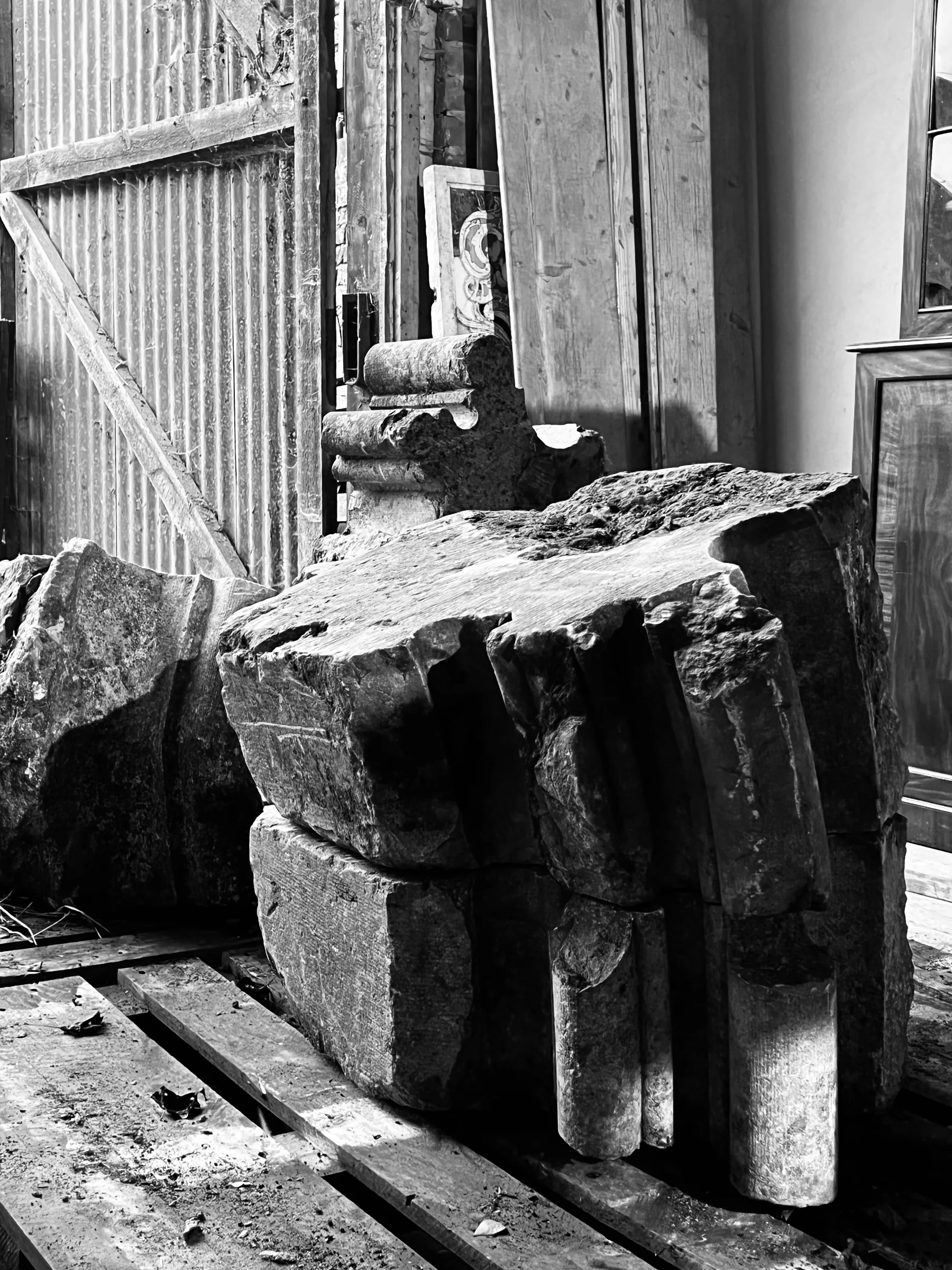
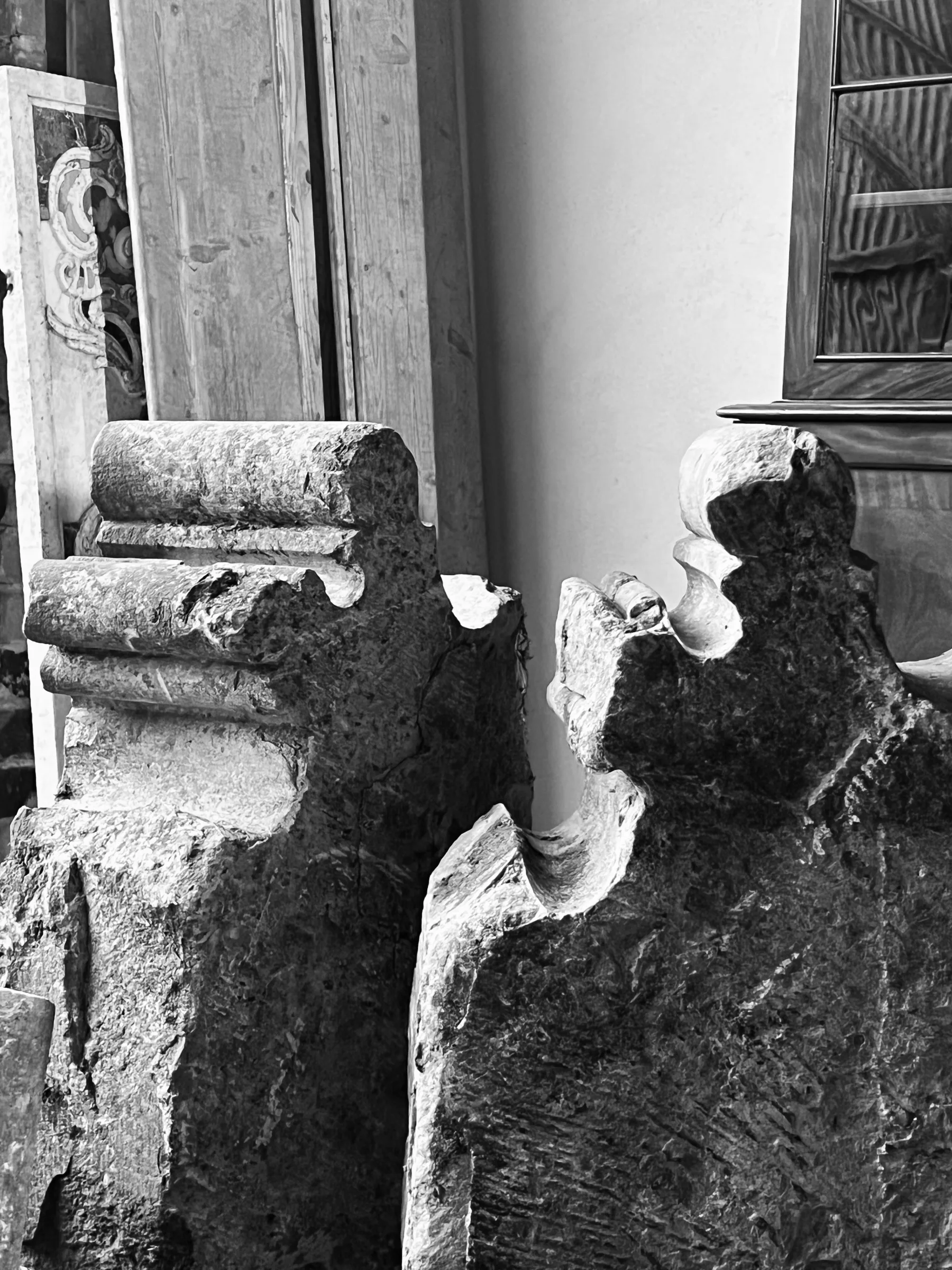
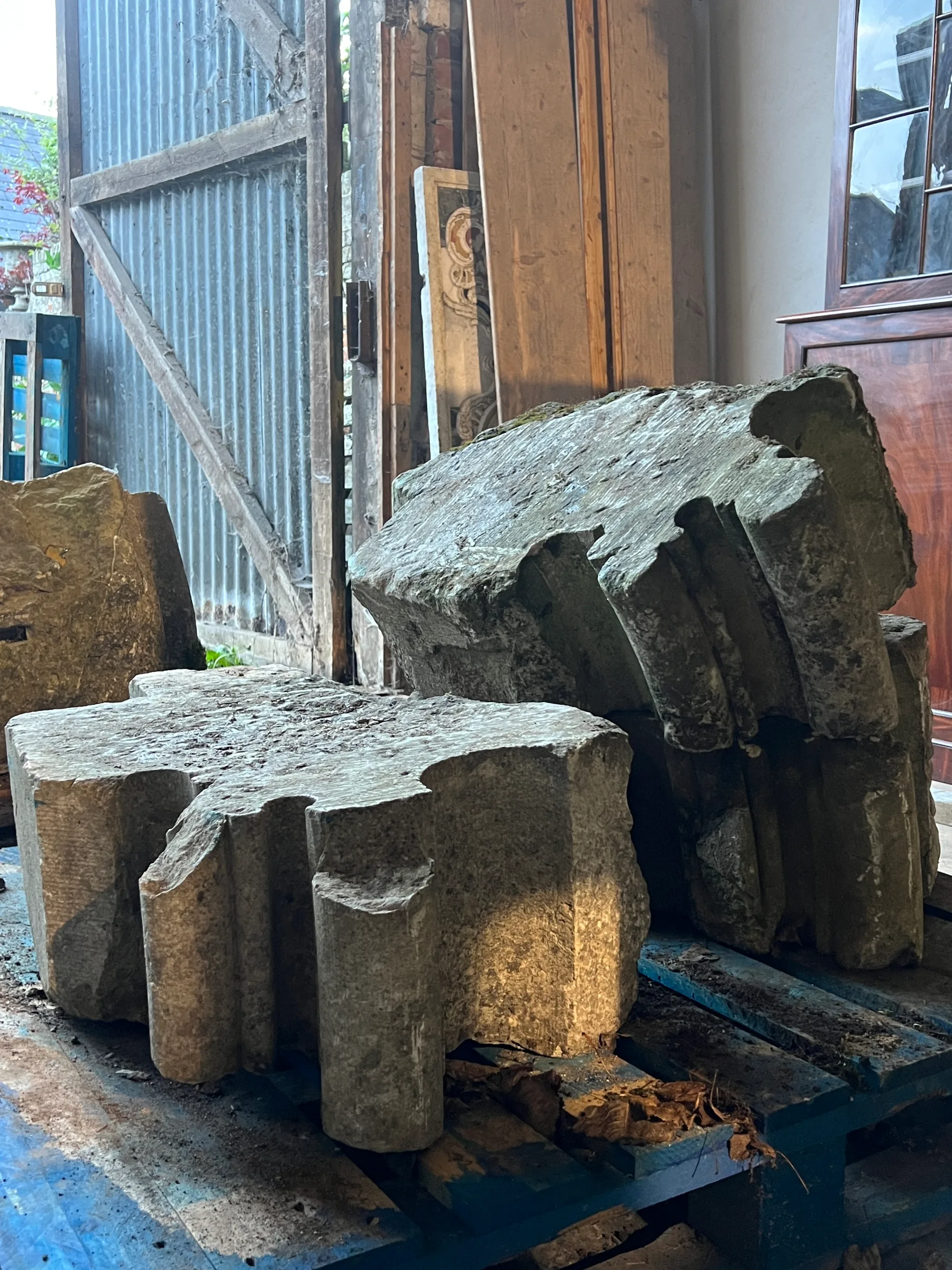
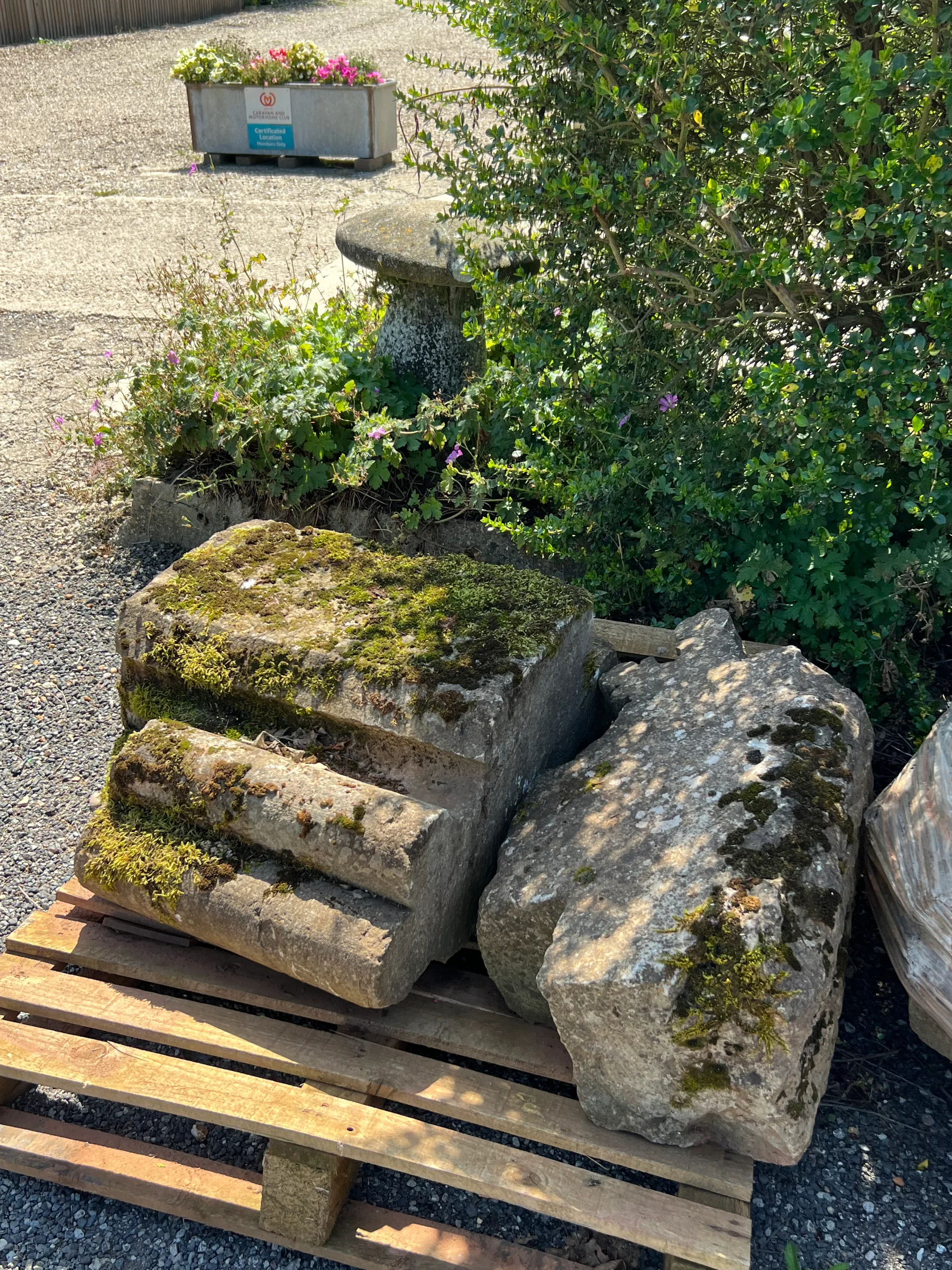
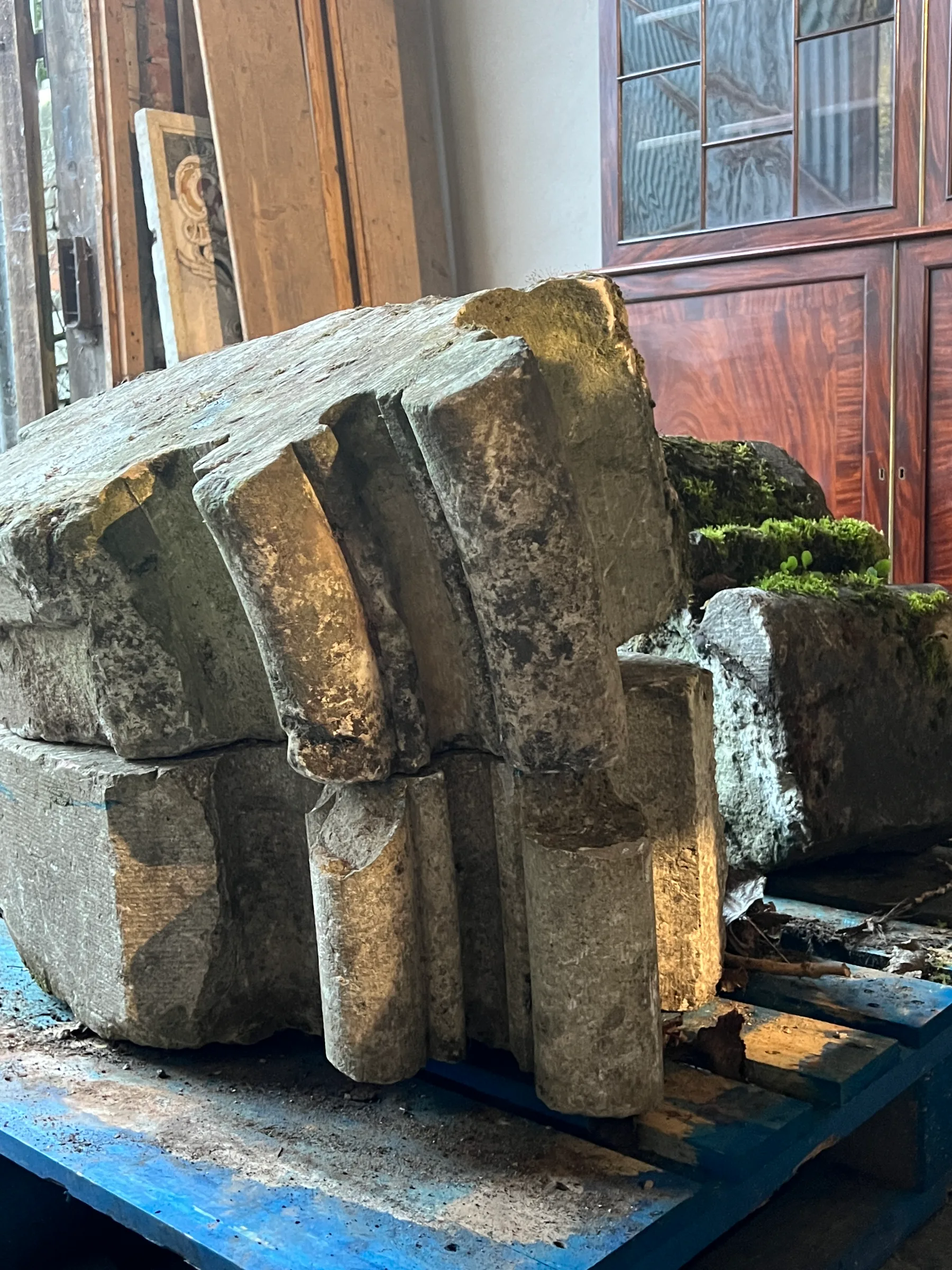
A substantial group of approximately 9 carved stone sections from Leeds Castle, Kent, including a possible keystone, forming parts of an incomplete Gothic archway. The surviving profiles combine bold rounded roll mouldings with deeply recessed hollows and narrow fillets. The quality of the carving suggests an opening of some architectural importance, possibly associated with the castle’s residential or ceremonial accommodation.
Probably medieval, and provisionally dated to the late 13th or 14th century. Leeds underwent significant development during this period, first under the Leybourne family and subsequently under Eleanor of Castile and Edward I. Recent research proposes substantial building work by Roger II de Leybourne in the 1260s, providing a possible context for the fragments, although their original location and precise date remain unconfirmed.
The sections retain weathered surfaces, losses and broken edges, with potential for incorporation into a garden folly or as an architectural opening framing a view or some sort of mossy, ferny grotto etc.
Nine measured sections range from 26–95cm high, 36–67cm wide and 75–85cm deep. Their combined individual heights total 386cm; thus if used as two sides of an archway they come to a height of 193cm / 6'4".
The overall dimensions of an assembled opening have not yet been established.